
Art & Soul Productions
  • Home
  • What's New!
    • a new Blog!
    • Charles W. Eliot Arts Magnet Academy
    • Mindscapes at The Warehouse!
    • Glam Slam and Paisley Park Revisit!
    • The Venetian Casino Revisit
    • Octavia E. Butler Mural
    • Robin Paul Memorial Mural
    • Desert Scene Gerden Mural
    • Altadena Arts Magnet Dance Room Murals
    • Altadena Arts Magnet Library Murals
    • Tiger Eyes! for Legacy High School!
    • Kokopelli's Magical Mystical Gateway
    • Alisal School District Mural
    • Wall of Honor Mural
    • 'Wall of Honor: First Responders' Mural
    • Community Kitchen's Parrots and Roses
    • Ochoa Hawks!
    • Hey Cardinals!
    • Period-Inspired Arts and Crafts Style Mural Frieze
    • Graphic-Murals for IMPAK
    • Cirque du Antiques! Pasadena Antiques Warehouse Mural
    • Tiki Hut and Woody Mural
    • Architectural trompe l'oeil mural-friezes
    • Geodesic Dome for the Studio!
    • Laurence Linkus: In Memoriam
  • Residential Murals
    • Wall Murals & Friezes
    • Ceiling Murals & Domes
    • Trompe l'Oeil Painting
    • Children's Rooms & Nurseries
  • Commercial Murals
    • Hospitality: Bars & Restaurants >
      • Community Kitchen's Parrots and Roses
    • Nightclubs & Casinos >
      • Glam Slam and Paisley Park
      • The Venetian Casino
    • Signs, Totems & Super-Graphics
  • Public Murals
    • Theatrical and Entertainment Murals
    • Liturgical Murals
    • Community and School Murals >
      • Charles W. Eliot Arts Magnet Academy
      • Octavia E. Butler Mural
      • Altadena Arts Magnet Dance Room Murals
      • Altadena Arts Magnet Library Murals
      • Alisal School District Mural
      • Pasadena Antique Warehouse Mural
      • Tiger Eyes! for Legacy High School!
      • Wall of Honor Mural
      • 'Wall of Honor: First Responders' Mural
      • Marshall High School...
      • Ocelot Territory! Mascot mural-frieze
  • Easel Paintings
    • Landscapes
    • Mindscapes >
      • The Continuum
      • Quantum Foam series
      • Pipe Series
      • Vessel Series
  • About...
    • About the Studio >
      • Geodesic Dome for the Studio!
    • About the Artist
    • About the Clients
    • Affiliates & Associates
  • Contact
  • Blog

The ‘Holy Trinity’ fresco by ‘Big-Ugly-Tom’ aka Masaccio

7/7/2025

0 Comments

 
Picture
"I have recently been studying the complicated history of Medieval Europe and the incredible works of the Renaissance Masters, and I was pleasantly reminded of Masaccio’s ‘Holy Trinity’ mural, one of my personal favorites from the Quattrocento period of the early Renaissance, in what is now Italy.
​

It is one of my favorites not only for it’s masterful and innovative use of the new perspective to create the illusion of depth with it’s lower portion (the ‘Sarcopha-Guy’ ;) coming out into the church-space, and the 3-dimensional decorative architecture with it’s base, columns, pilasters and arch, but also for Masaccio's use of quadrature illusionism to create a virtual barrel-vaulted chapel to enclose the main subject(s)." -RQ
​
Picture
"Masaccio not only uses the newly invented (discovered?) rules of perspective to fool the eye, but he also creates an almost ‘surreal’ trick of the mind, by subtly breaking the rules of perspective he has just convinced us, the viewers, to accept as real… by having his allegorical ‘God-the-Father’ standing at the rear of the chapel/vault area while simultaneously supporting the arms of the crucified Christ, which is clearly mounted in the front of the chapel/vault, under the arch!” -RQ
Picture

​Art Encyclopedia
Visual Arts of Painting | Sculpture |Architecture
Photography | Ceramics and other crafts


Interpretation of the Holy Trinity by Masaccio

One of the iconic works of Renaissance art, The Holy Trinity with the Virgin and Saint John and donors (1428) can be seen in the Dominican church of Santa Maria Novella, in Florence. Like many religious paintings produced during the Renaissance in Florence, it also has a secular side.
​

First, it depicts the Trinity of God the Father, Christ the Son and the Holy Ghost (symbolized by a white dove); second, it also functions as a commercial portrait of the patron or customer.
The work was commissioned by Domenico Lenzi and his wife, as a mural painting for the family remembrance chapel at Santa Maria Novella.

However, the feature that made it one of the 15th century's most influential Renaissance paintings, is its use of single-point linear perspective to organize its composition.

Its 27-year old creator Tommaso di Giovanni Masaccio (1401-28) was to Early Renaissance painting what Filippo Brunelleschi (1377-1446) was to architecture, and Donatello (1386-1466) to sculpture.
​
Superb Demonstration of Linear Perspective

The geometric principles of linear perspective - the technique whereby an artist may depict three-dimensional depth on the flat painting surface - appears to have been discovered by Leon Battista Alberti (1404-72) in his treatise Della Pittura (On Painting) published in 1435.

As a science, perspective was associated with optics and the study of vision, but as a pictorial technique it was only properly explored during the Early Renaissance in Florence.
In his Holy Trinity, Masaccio was the first individual of the Florentine Renaissance to properly explore the illusionistic potential of this new technique.

The painting depicts a chapel, whose cavernous interior seems to open up before the viewer. Inside, framed by Ionic columns, Corinthian pilasters and a barrel-vault ceiling, a crucified Christ is overlooked by God and the Holy Spirit, flanked by John the Evangelist and the Virgin Mary. The modelling of these figures is so realistic that they could be statues. Each of them - except for God, the immeasurable entity - occupies their own three-dimensional space.

To cap it all, in front of the pillars which form the entrance to the make-believe chapel, Masaccio portrayed the two donors Domenico Lenzi and his wife. He painted them life-size and in equally realistic detail. The whole trompe l'oeil effect of the chapel and its occupants is a stunning example of how realistic depth can be incorporated into a flat painting.
​

At the front of the picture, below the level of the chapel floor, there is a sarcophagus on which Adam's skeleton is laid out as a memento mori for the viewer with its inscription "I was once as you are and what I am you also shall be."
​

Influential
Masaccio's Holy Trinity became a hugely influential painting for generations of Florentine artists. Writing over a century later, the Mannerist artist and biographer Giorgio Vasari (1511-74) was so overwhelmed by  Masaccio's perspectival foreshortening that he was convinced there was a hole in the wall containing the make-believe chapel!

In 1570, a stone altar was built in the church of Santa Maria Novella, which led to Masaccio's mural being covered up. As a result, the fresco remained invisible for almost three centuries from 1570 to 1861, until the altar was removed and the painting once again became visible. However, it wasn't until 1952 - when the lower (skeleton) part of the painting was also uncovered - that the entire fresco was put on view.
​

Masaccio​
Within months of completing the work, Masaccio was dead.

His sudden demise put an end to his meteoric 7-year career, during which he had already produced three other masterpieces:
​
Madonna with St. Anne (c.1423, Uffizi, Florence),
the Pisa Altarpiece Polyptych (c.1426, Staatliche Museen, Berlin), and
the Brancacci Chapel frescoes (c.1425) in the Church of Santa Maria del Carmine.
​
​He remains one of the greatest Early Renaissance artists.

​
0 Comments

Cholo graffiti in East Los Angeles with Cheech Marin / Part B: Chaz Bojorquez

5/5/2025

0 Comments

 
Let’s continue Cheech’s exploration
​of the roots of East L.A. graffiti
and his conversation with…

​
Picture
CHAZ BOJÓRQUEZ:  "Some people date the first graffiti in LA back to the 1930s, when shoeshine boys would mark their spot on the street by writing their names on the wall. There are tags by the Los Angeles River that date back to the ’40s, painted with sticks and tar. Before spray cans were invented, most of the graffiti was made with paint and brush."
Picture
"Chicano gangs were originally formed for protection, in response to racism. When people think of LA gangs, they usually think of drug dealing and violence, but the Chicano gangs were originally more about taking pride in a neighborhood.
​

By 1943, when the riots happened against the Latino zoot suiters, it created the foundations for the Cholo culture. Graffiti was a way to define your identity and say, “This is Latino territory.” This is our roll call, our names written on the wall—that’s what’s called a "placa". Placas are usually placed at the edge of a neighborhood, marking the territory for an individual gang. It says, “This is ours.” When I see a tag, I see a complaint; I see a whole bunch of tags, I see a petition."
Picture
"I lived in the neighborhood of the Avenues gang. I was not a gangster, I was a hippie, my cousins were gangsters in prison, and my friends were surfers—but we were all the same, there wasn’t a distinction that you had to be a gangster to tag. We were always at the same liquor store tagging. You could tell the little guys by the bad handwriting, and they would write low, at eye level. And the older guys, they would write bigger and taller. But was it about being the highest and all that? No, that was not the case. Your tag was allegiance to your community. You never went out of your neighborhood to tag.​

Picture
"The gangs used Old English type because it was seen as the most prestigious. It was on your birth certificate, the newspaper—the LA Times."
Picture
MARIN: "It’s a co-opting of legitimacy and a form of code-switching. Switching from one language to another, one culture to another—the formality and the prestige of that and adapting it to your own style—you say two things at the same time."
Picture
BOJÓRQUEZ: "And then there’s that other style, ‘Teen Angel’. It’s a script, for tattoos and drawings. We used to write beautiful script letters on the side and back windows of lowrider cars, you know, words like “Pillow Talk” or “Sad Boy,” all that stuff."
Picture
​MARIN: “I’m so tired of being alone.”
​

BOJÓRQUEZ: “They use ‘Teen Angel’ for tattoos across the neck. But it would never go up on the walls; nobody does that in the streets.”
Picture
MARIN: "You were studying art while you were tagging, right?"

Picture
BOJÓRQUEZ: "I started taking art classes when I was about fourteen years old, before I was tagging. I was very aware of the art scene of the time—Andy Warhol, the Ferus Gallery guys—but I did not see a Latino face. Then I was going to the Chouinard School of Art in ’67, and again I was very disappointed because I did not see a Latino face anywhere. That’s why I started tagging—for myself."
Picture
MARIN:  “In 1972, the Chicano art collective Asco tagged the outside of LACMA, because the museum didn’t show Chicano artists. Two years later, the museum gave another Chicano group, Los Four, a show. But for the museum, it was barbarians at the gate. It was, “Okay, we’ve shown it once, you’ve had your day.”
Picture
​BOJÓRQUEZ: "Exactly. In art school, I became disillusioned.
I wasn’t getting support from my art teachers or anything like that, I was getting kicked out of school because they didn’t see any value in my fine-art work. So, I said, fuck school, I’m just gonna go back to graffiti at night.

That’s when I came up with the image of Señor Suerte. It mixes a lot of different styles from the ’60s. The skull, of course, is Mexican, from Día de los Muertos. But also at that time, there was the black civil rights movement—I copied that look you saw in movies in the 1970s, like Shaft and Super Fly, with the pimp daddy hat, the fur collar. I liked that look."

Picture
MARIN: "Who doesn’t like that look?"

BOJÓRQUEZ: "I was smoking a lot of dope, so the first drawing had a joint, but then I thought, I’m not gonna put drugs in the street, that’s disrespectful. You know, it was the Latino morality. So I crossed his fingers and took the joint out."
Picture
"The first time I tagged my skull symbol I did it freehand with a spray can, and it came out badly. So I turned to the latest technology of the ’60s—plastics—to cut out a stencil with more detail and total control. My first tag was on the 110 Freeway from downtown LA to Pasadena, when you’re coming out of the freeway tunnels; I tagged the spiral staircase. That was ’69, and it stayed there ’til the Olympics in ’84. Then, about fifteen years after that first tag, I started seeing it tattooed on gangsters from the Avenues gang. It’s become a symbol of protection: If you get shot and have the skull tattooed on you, it will protect you from death. So since then, I put it away, I don’t make T-shirts, I don’t make nothing—it belongs to them, because they live and die for it. It’d be stupid to commercialize that image."
Picture
MARIN: "Is danger part of graffiti? The more dangerous and hard to do, the better—to put it in the spot where you know the guy is fucking rappelling off something to get there?"
​

BOJÓRQUEZ: "That’s the style from New York. It’s been taken up by new guys, but that’s not West Coast Cholo. I only tagged in Highland Park, I never went out of Highland Park. One time I did Hollywood because I worked at this job, but otherwise when I see young kids hitting all over the place, that’s New York mentality—me, me, me. It wasn’t our tradition. One writer would write for the group, and our tags were about us."
Picture
​MARIN: "Real little micro-neighborhoods, man. And essentially that particular gang that was in that neighborhood lived and died for their four-square blocks."

BOJÓRQUEZ: "It’s clannish, it’s really clannish."

MARIN: "So at the moment that mass transit comes in, that separates it from marking territory?"

BOJÓRQUEZ: "I don’t see gangsters on trains. I’ve never hit a train. I never see trains."

MARIN: "Well, buses."
​
BOJÓRQUEZ: "Tagging buses, that’s a younger man’s game, from the 1990s. We never hit buses. We didn’t hit churches or buses. When New York–style graffiti started coming in here about the mid-1980s, all the young kids went all New York gaga. The documentary Style Wars came out in ’84, and it changed overnight. There was the excitement of the world movement out of New York.
But I want to say that New York was the first to take graffiti to heart because they took their pieces and put a frame around it and made a gallery, the FUN Gallery and all of that. 
And they changed it into a product—like Haring with his Pop Shop. But it didn’t last. New York is all about “Been there, done it, next thing.” Then there were the anti-graffiti laws, and that closed off the subways. What happened over here was, it just stayed gangster."
Picture
MARIN: “Is that a good thing? Are we supposed to think globally or should we cling to the specificity of our four blocks?”

BOJÓRQUEZ: “What’s unique about LA is that we bring our culture into our graffiti. Cholo culture is Mexican-American culture, and our style carries our culture. To the world graffiti movement—99.9 percent New York–influenced—Cholo is a subculture on the West Coast, but we choose to write with cultural pride in our letters and that’s our strength.”
​

MARIN:”But I think it’s gonna be impossible with every generation, ’cause every generation of kids will interpret it in their own style. Who gets to define what Chicano is? Every generation of Chicanos defines what it means to be Chicano for them, and they have just as much right to say it as a Chicano that grew up in the ’40s does.
The biggest controversy I had when I exhibited my art collection under the title Chicano Vision was using the word "Chicano". “Can we call it Mexican-American art, or Hispanic art, anything but Chicano art?” By definition, it was not art if a Chicano did it; it was agitprop. At the same time, the radical political activist Chicanos, they didn’t want anybody else using that name but them. I was just a fuckin’ dope-smoking comedian. Those Chicanos thought they made up the term in 1968. But I thought, hey, that’s finally a term that defines who I am. I’m not a Mexican, I hated Mexican-American, Hispanic, fuck that. I’m a Chicano.”
Picture
Los Angelenos/Chicano Painters of L.A.:
Selections from the Cheech Marin Collection
​

The Cheech Marin collection is notable for classic examples of Chicano art produced from the inception of the Chicano movement to the present, with a concentration in painting from the 1980s and 90s. This exhibition includes a number of widely exhibited works by such first-generation Chicano artists as Carlos Almaraz, Margaret Garcia, Gilbert “Magu” Luján, Frank Romero, John Valadez, and Patssi Valdez, whose artistic careers began during the Chicano civil rights movement in the mid-1960s to mid-1970s, as well as works by such younger artists as Vincent Valdez and David Flury. Los Angelenos/Chicano Painters of L.A. is a Los Angeles-focused selection of Chicano Visions: American Painters on the Verge, an exhibition of the Marin collection that toured nationally between 2001 and 2007.
​

BOJÓRQUEZ: “I fought for that word "Chicano". And I believe that Cholo graffiti is Chicano art. Chicanos were the hard ones to convince. They said it was anti-Chicano because Chicano was family, religion, farmworkers, border and migration issues, not this bad-boy stuff— “it undermines what we’re doing, it’s not art.” I started out as just a tagger, but then I came to define myself as a graffiti artist—and I really had to defend that word "artist". Now I don’t just work in the arts, I do graphic design—I work in culture.
But the only way to stay where I’m at is to stay pure. I’m always going back to the original letters of Old English to build my foundation, but I include my own style of control of Asian calligraphy. I like the traditions of Cholo and the expressive spirit from Asian philosophy. I came back to my community feeling more like I better get up in my four blocks. I constantly ask myself, how can I paint more pride or strength—how do I add balls to my letters?”
Picture
Picture
​ Chaz Bojórquez (b. 1949, Los Angeles)
grew up in Highland Park, where he created a graffiti icon that was adopted by the local gang.
Bojórquez  first encountered graffiti as a young boy while exploring the concrete riverbeds of the Los Angeles River.
The markings he found there introduced him to the Cholo graffiti that Chicano Angelenos had been developing since the 1930s. While a student at Chouinard Art Institute (now CalArts) in the 1960s, he developed his signature character, a stenciled, fedora-wearing skull named Señor Suerte. 

Bojórquez’s position as one of the city’s premier Cholo graffiti artists was cemented in 1975 with the publication of photographer Gusmano Cesaretti’s book:
 Street Writers: A Guided Tour of Chicano Graffiti.  
Picture
Working on canvas since 1979, Bojórquez mixes powerful variations on Cholo fonts, informed by his study of Asian calligraphy, with the iconography of the Day of the Dead and other traditional Mexican folk imagery.
An elder statesman of the Los Angeles street scene, he has exhibited widely and has worked on numerous graphic design projects. The monograph 
The Art and Life of Chaz Bojórquez
 was published in 2010.
Picture
Picture
Picture
CHAZ BOJÓRQUEZ
Draws his inspiration from Los Angeles where he was born, grew up and still lives. He received formal art training at Guadalajara University of Art in Mexico, California State University Los Angeles and the Chouinard Art Institute now known as Cal Arts.
​Under Chinese Calligraphy Master Yun Chung Chiang, Chaz developed a deep understanding for written language. He worked as a commercial artist in advertising and film before concentrating on painting.

Chaz is the “Godfather of Los Angeles Graffiti Art”.


“I put 50 years in of writing. I am an Original. We started this stuff. We not only had the best book... but, it was the very first book” –– Chaz Bojórquez

https://streetwriters.com/pages/the-artist
ARTE POVERA FOTO BOOKS
Independent publishing company dedicated to releasing limited edition photography books rooted in culture.
          
https://streetwriters.com/pages/contact-media-inquiries
CONTACT
Arte Povera Foto Books, Inc.
PO Box 421203
Los Angeles, CA 90042
Email: [email protected]
 
0 Comments

Laurence Linkus: Posthumous Art Exhibition!!

3/24/2025

0 Comments

 
(Cheech Marin’s interviews with Cholo Graffiti Artists will have to wait!)
This exciting
Art Show
​announcement
just came across my desk!
Picture
!Come one!
!Come ALL!

Come and enjoy Link’s Art!
Haggle! Barter! Bid! Brawl!
-!! Make an Offer !!-
Original Paintings! Drawings! Sketches!
Prints! Illustrations! Photography!
​

This is a FANTASTIC opportunity
​to see what may be the last exhibition
​(in the U.S.)
of this World Famous Artist’s
Fine-Art Corpus!!
​
Picture
Link and Bonnie’s daughter, Daena,
doesn’t want to have to ship
all of Link's AMAZING art-work
back to Germany!!

She would much rather have it all go to friends, colleagues and patrons
who will enjoy and cherish it!
​

RSVP to Daena’s eMail: [email protected]

(or just CRASH the party!
That’s what Link would do!)
​
"Do I need to remind you all of what happens to the $-VALUE-$ of the works of​
Dead-Genius-Artists!?!"
​
600 Maulhardt Ave.
Oxnard, CA 93030
Picture
Picture
 
Picture
And
since this is still a "Mural Blog"...
here's a link...
​to some of Link's mural work!

​
0 Comments

The Shamans of Prehistory: Trance and Magic in the Painted Caves

2/4/2025

0 Comments

 
This post was scheduled for the first Monday of February…
However Monday, February 3, 2025 was:

A Day Without Latinos:
The Peoples Fight for Justice

https://brownrock.org/2025/02/02/brown-people-matter-the-peoples-fight-protest-for-justice-in-downtown-los-angeles/
(Thanx Elaine!)
I hope you missed me! -RQ
​

"Here's another one of my favorite
books from my library!"
​

“The Shamans of Prehistory”
Trance and Magic in the Painted Caves
by Jean Clottes & David Lewis-Williams

Picture
Picture


• Harry N. Abrams, 1998

• ISBN 0810941821 (ISBN13: 9780810941823)
• Hardcover, 120 pages
From: 
https://www.bradshawfoundation.com/books/shamans_of_prehistory.php

This startling book reveals a new way of understanding the remarkable images painted or etched on rock walls by the people of prehistory.

Noting the similarity of prehistoric rock art with that created by some contemporary traditional societies, archaeologists Jean Clottes and David Lewis-Williams suggest that the ancient images were created by shamans, powerful individuals who were able to contact the spirit world through trance and ritual. In many societies throughout history, shamans have been consulted to try to change the weather, foretell the future, control the movements of animals, and converse with the dead.​

With an abundance of full-color illustrations, Clottes and Lewis-Williams draw on neuropsychology and ethnography to follow prehistoric shamans into their trance states. The authors shed light on what these artists were thinking and how they may have worked.

​On these pages, Paleolithic art and life are seen in a new and astonishing way.

Picture
Since the first report of cave art (at Altamira in 1879), attempts have been made to explain the purpose of the mysterious drawings. Art for art's sake; totemism; hunting, destructive, or fertility magic; and modern structuralist theories have all been proposed. Clottes (The Cave Beneath the Sea: Paleolithic Images at Cosquer, LJ 4/1/96) and Lewis-Williams (cognitive archaeology, Univ. of the Witwatersrand, Johannesburg) propose a new theory emphasizing the shamanic aspects of Paleolithic cave paintings.

After an unavoidably technical chapter providing the basics of shamanism, the authors examine Paleolithic paintings from across France and Spain, noting the use of animal figures, composite figures combining both human and animal characteristics, and geometric designs that are all common elements of shamanism.

The bulk of the book is both fascinating and thought-provoking, and while it is not likely to be the last word on the subject, it is an important contribution to the field. Recommended for academic and large public libraries.
Copyright 1999 Reed Business Information, Inc.
Picture
Picture


​​Theory of prehistoric shamanism

Some of Clottes's most publicized contributions to the study of prehistory have come not in the form of field research, but in his efforts to propose a plausible theory of the psychological and social context in which prehistoric cave art was created.[3][5] In 1994 he joined with South African anthropologist David Lewis-Williams to study prehistoric art in light of known neuropsychological phenomena associated with shamanic trances.[3][5][6] Together they concluded that there is a strong argument for believing that much of prehistoric art was in fact produced in the context of shamanic practices.
In 1996 they published their findings in the book Les Chamanes de la Préhistoire: Transe et Magie dans les Grottes Ornées (published in English in 1998 as 
The Shamans of Prehistory: Trance and Magic in the Painted Caves).[5]


The book received heavy criticism from some other researchers, with some objections stemming from a reluctance to use modern ethnographic or psychological observations as a basis for speculating on the meaning of prehistoric art, following clumsy early-20th-century attempts to do so.

Other experts found the ideas compelling, and suggested that academic infighting or jealousy may have played a role in the criticism.[3] 

In response to their critics, Clottes and Lewis-Williams published an expanded version of their book in 2001 (Les Chamanes de la Préhistoire: Texte Intégral, Polémique et Réponses).
David Lewis-Williams later went on to develop aspects of their thesis more fully in his own book The Mind in the Cave[6] and its sequel, Inside the Neolithic Mind (co-authored by David Pearce).[7]

Picture
Jean Clottes is a prominent French prehistorian.
He was born in the French Pyrénées in 1933 and began to study archaeology in 1959, while teaching high school.
He initially focused on Neolithic dolmens, which were the topic of his 1975 Ph.D. thesis at the University of Toulouse.
After being appointed director of prehistoric antiquities for the Midi-Pyrénées in 1971, he began to study prehistoric cave art in order to fulfill the responsibilities of that position.
In the following years he led a series of excavations of prehistoric sites in the region.
In 1992, he was named General Inspector for Archaeology at the French Ministry of Culture;
in 1993 he was appointed Scientific Advisor for prehistoric rock art at the French Ministry of Culture.
He formally retired in 1999, but remains an active contributor to the field.
Picture
James David Lewis-Williams is professor emeritus of cognitive archaeology at the University of the Witwatersrand in Johannesburg.
David Lewis-Williams, as he is known to his friends and colleagues, is regarded as an eminent specialist in the San or Bushmen culture, specifically their art and beliefs.
His book, The Mind in the Cave: Consciousness and the Origins of Art (Thames & Hudson) won the American Historical Association's 2003 James Henry Breasted Award.
His most recent books are:
Inside the Neolithic Mind: Consciousness, Cosmos, and the Realm of the Gods (Thames & Hudson) co-authored with David Pearce and published in 2005,

Conceiving God: The Cognitive Origin and Evolution of Religion, published in 2010, and

Deciphering Ancient Minds: The Mystery of San Bushman Rock Art, co-authored with Sam Challis and published in 2011.
Picture
​Review from Booklist:
With an abundance of full-color illustrations, Clottes and Lewis-Williams draw on neuropsychology and ethnography to follow prehistoric shamans into their trance states. The authors shed light on what these rock artists were thinking and how they may have worked. On these pages, Paleolithic art and life are seen in a new and astonishing way.

“The most obvious question about cave art is why is it there, and Clottes, a prehistoric rock art expert associated with the French ministry of culture, and Lewis-Williams, a South African professor of cognitive archaeology, propose an elegant answer in this beautifully illustrated volume. 

They begin by documenting the universality of certain cave art images, then suggest that these paintings are shamanic in nature. 

They make their case in a fresh and lucid discussion of the methods shamans use to achieve altered states of consciousness in order to get in touch with the spiritual realm, then, shifting to a neuropsychological perspective, characterize the types of hallucinations experienced at the three main stages of trance: geometric shapes, objects of religious or emotional significance, and visions of animals, monsters, and people. 
​

The three sets of visions are depicted gracefully on cave walls deep beneath the surface of the earth, the perfect setting for a journey to another world. 
​

This is a handsome and quietly thrilling solution to an old and essential mystery.”  —Donna Seaman
Picture


Reviewed by Barnaby Thieme, 8/22/2012:

​
The good folks at Erowid have posted my (Barnaby Thieme) review of The Shamans of Prehistory by Jean Clottes & David Lewis-Williams, two prominent authorities on paleolithic cave painting. 

I (Barnaby Thieme) am sympathetic to the book’s central argument that many painted caves served a ritual function related to archaic forms of shamanism, but I found their specific cognitive-archaeological model to be under-developed.

Clottes and Lewis-Williams ground their theoretical framework in an altered states model of shamanism and speculate that early shamans may have utilized visionary plants to induce trance states. The Erowid site which hosts a massive online archive of information relating to psychoactive plants and chemicals and their use.
​
You can read the full review here.

Beginning some 35,000 years ago, hundreds of cave sanctuaries throughout southern France and Spain were lavishly adorned with beautiful and evocative paintings and engravings. Prehistoric artists carried out their work with remarkable stylistic continuity for over 20,000 years. 

Since this world of buried art was rediscovered and explored in the last hundred years, these paintings have been admired for their rich, expressive depictions of animals and geometrical patterns.

But what do these paintings mean, and why were they created? How were these caves used?
 At various times, scholars have interpreted cave paintings as art for art’s sake, hunting instructions, sympathetic magic, totemistic representations of clan identities, or symbolic vocabularies with complex systems of meaning.

In The Shamans of Prehistory: Trance and Magic in the Painted Caves, two prominent researchers argue that many European caves are linked to shamanic ritual practice and initiation. Renowned expert Jean Clottes, who served as principal researcher of the magnificent Chauvet cave of southern France, co-authored this book with South African cognitive archaeologist David Lewis-Williams, a specialist on the San culture of the Kalahari, which practices rock painting to this day.
Picture
At 120 pages, this book is essentially a long essay laying the basis for the authors’ shamanic hypothesis and attempting to ground it in biological terms.

While I (Barnaby Thieme) found their central thesis to be underdeveloped, the authors do an admirable job of surveying the available evidence, providing a valuable analysis of the known art.


The book is lavishly illustrated, though the pictures are rarely captioned with date information.

In the book’s introduction, the authors present a brief account of shamanism as a religious paradigm. They focus on the role of shamans as expert practitioners who carry out supernatural feats by entering trance states through various means, including the use of visionary plants, isolation, fasting, chanting, and dancing. In these altered states, they travel into the heavens above, or into a world beneath the earth, where they encounter spirits and animal powers who assist them in their work.

Picture
The authors argue that the visionary states experienced by the shaman conform to a three-stage model that characterizes trance or altered consciousness, including those evoked by ritual practice and those caused by psychoactive substances such as LSD.

The authors interpret the generality of their three-stage model as evidence for a shared biological process at work, one that is triggered in different ways but produces a similar experience.
​

Stage one of their model consists of the appearance of vivid, luminous, geometric patterns.
Picture
In stage two, the fuzzy and ambiguous geometric images begin to take on meaningful shapes and symbols, as the subject “recognizes” them as outlines of known shapes (e.g. horses, lions, etc.). The transition between stages two and three is often marked by an experience of passage, such as moving through a tunnel or flying. Stage three involves frank hallucinations of otherworldly symbols and beings.
Picture
​This model is used throughout the book as a framework to explain the universality of characteristic shamanic visions, such as the magical flight, which may be interpreted as the transition between stages two and three. Many cave paintings can be interpreted as reflecting one or more of the stages. This may indicate the caves were ritual or initiatory centers that either depict or help elicit shamanic visions brought about through various means.
​
In my (Barnaby Thieme’s) opinion, the model is inadequate as an explanatory mechanism, and unable to do the heavy lifting Lewis-Williams and Clottes require of it. Its key terms are extremely vague—especially the central concept of “altered states”.

This term can refer to a vast array of states of awareness, including alertness, stupor, delirium, hallucination or bliss. Even if we restrict ourselves to visionary situations that involve both visual distortions and frank hallucinations, we still find a diverse set of experiences that is poorly characterized by this model.
​
​The authors suggest at several points that the fitness of their altered-states model to the evidence may indicate that hallucinogenic plants were ritually used. To evaluate that hypothesis, we need to examine which hallucinogens fit their three-stage model, and ask if they were available in Europe in prehistoric times.

I submit that the classical tryptamine and phenethylamine hallucinogens, such as psilocybin or DMT and mescaline, are the best fit for their altered-states model. 
Unfortunately, these are overwhelmingly found in the New World, and were probably unknown within Europe until sometime long after the caves had been painted.

​
What potentially hallucinogenic substances were most likely to be available in the late Stone Age in Europe?
​
I suggest the following candidates: carbon dioxide, cannabis, opium, Amanita muscaria, Syrian rue, and solenaceous plants, including datura and belladonna.


At the right dose levels, carbon dioxide intoxication does fit well with the three-stage theory, as we learn from the extensive research of Dr. Ladislas Meduna. The authors do not mention carbon dioxide intoxication in this book, but Clottes speaks of it in his Cave Art (Phaidon, 2010), where he speculates that some cave chapels may have caused carbon dioxide intoxication due to poor ventilation and this could have played a role in the paintings.

The problem with this theory is that high levels of carbon dioxide rapidly cause unconsciousness and death; indeed, the gas is frequently used to euthanize animals. Hallucinations generally occur at the threshold of unconsciousness, and it’s hard to imagine how any shaman could fall insensibly into a visionary stupor in the depths of a cavern thick with carbon dioxide, and then live to tell the tale.
Picture
Psilocybin-containing mushrooms may have been known in Europe in prehistoric times, but the evidence for this is extremely tenuous. Surprisingly, the authors don’t consider the famous rock art bee-masked being that may be covered with mushrooms, found on the Tassili plateau of southern Algeria. But the link between that image and psychoactive mushrooms is speculative, and Algeria is a long way from Dordogne.

 Cave paintings usually depict easily recognizable animals in crisp, elegant outlines, either isolated or in small groups.
 Modern visionary art inspired by hallucinations, on the other hand, frequently emphasizes figure-ground ambiguity with crowded visual fields saturated with suggestive images.

It would also be remarkable to find a long-lived visionary bestiary so limited in its repertoire. We frequently find horses, aurochs, and mammoths, but almost never snakes, insects, or birds. What kind of visionary artist doesn’t paint snakes?

I don’t believe the theory works much better with endogenous altered states. Trance states evoked by meditation, chant, isolation, prayer, or dance are no less diverse than those evoked by psychoactive substances. I don’t see the three-stages model as a good description for my (Barnaby Thieme’s) experience of any of them.

It’s entirely possible, or even likely, that psychoactive plants were part of the spiritual tool kit for Homo sapiens in the Paleolithic, but I don’t see clear evidence linking them to cave art.
Picture
I (Barnaby Thieme) am also a firm proponent of the shamanism model for understanding Paleolithic cave art, but on comparative grounds, such as those advanced by Mircea Eliade.

The structure of many cave sanctuaries strongly suggests an initiatory domain, easily recognizable from sacred spaces used by cultures today. The placement of key artwork in remote, difficult-to-access chambers implies a journey. The animal images are of an archaic character that fit extremely well with what we observe in contemporary shamanic cultures, such as among the Intuit, Tlingit, or Haida. And some of the composite “sorcerer” paintings are richly evocative of trance states or initiatory visions of a well-known type.
​

Picture
​Purchase Book
The Bradshaw Foundation Book Review


0 Comments

2 (Two!) Individual Artist Grants Now Open from DCA!

10/7/2024

0 Comments

 
We Interrupt this exciting series of blog-posts on ‘Ghosts’
and ‘Resurrections’ for a timely announcement just in from
​the City of the Angeles’ Department of Cultural Affairs!
​
​Feel Free to share these with your creative friends! -RQ
Picture
1).  2024 City of Los Angeles (COLA) Independent
Master Artist Projects (IMAP) Grant Program
The COLA-IMAP Grant Program allows accomplished artists to create a new “mid-career” solo work with the freedom to re-focus on themselves and their core impulses. The COLA-IMAP grant category honors a spectrum of the City’s avant-garde artists who:
    •    Are dedicated to an ongoing body of excellent work.
    •    Represent a relevant progression through their pieces or series over the past 15 years (or 8 years for a dancer/choreographer).
    •    Exemplify a generation of core ideas in their field.
    •    Are respected by their peers and are role models for other artists because of their distinguished record.
Approximately 6-12 COLA-IMAP grant-contracts will be offered for designers/visual artists (including architects, graphic designers, and product designers including fashion designers), literary artists (poets or fiction writers) and performing artists (including choreographers who wish to make and perform individual dance works, musicians who wish to compose and perform individual music works, and multi-disciplinary theater artists who wish to invent and perform solo works).

The Department of Cultural Affairs (DCA) will organize an online and/or printed catalog to promote the entire set of COLA-IMAP grantees as “creative treasures” and document/market the group as one cross-section of the exciting Los Angeles art scene. DCA and community partners will also attempt to showcase a curated selection of each master-artist’s new work in either a gallery exhibition or performing arts showcase
​

Amount: $10,000
Picture
 

-  AND -


2). Neighborhood Engagement Artist Residency and
Creative Optimism-Uplifting Promises Grants
Neighborhood Engagement Artist Residency (NEAR) grants support freelance teaching artists, social-activation artists, and social practice artists in community-based, participatory projects in self-selected non-arts venues within the City of Los Angeles. Competitive NEAR projects will gather, connect, and inspire participants and audiences who have little exposure to the proposed type of cultural opportunity. NEAR projects should be structured as eleven or more free or low-cost sessions culminating in one or more presentations that are open and promoted to the general public (proposing at least eleven workshops is the ideal duration for community engagement; however, applicants are encouraged to propose projects that can be scaled back to five workshops with one public presentation, as DCA staff will notify NEAR applicants next May about whether the City budget is able to provide NEAR grantees with either a $12,000 or a reduced $6,000 service contract)

Creative Optimism–Uplifting Promises (CO-UP) grants support collaborations between a local nonprofit social justice organization and a creative teaching artist (a freelance artist or an artist already working within a non-profit arts organization in the same community as the social justice organization). In some cases, a third partner, acting as a host site for the project may also be named. Eligible collaborative projects should be: 1) new or launched within the past four years, 2) free or low-cost for participants, and 3) culminate in at least one free public presentation that will be accessible to the general community. CO-UP residences should be structured as eleven sessions ending in one public presentation. CO-UP residencies are funded at $15,000 with $12,000 allocated for artist payment and $3,000 allocated for the social justice organization’s administrative expenses (meritorious CO-UP proposals that cannot be fully funded at $15,000, may be converted to a NEAR project consisting of five workshops and one culminating event with a budget of $6,000 — DCA staff will notify CO-UP applicants next May about whether the City budget able to provide grantees with either a $15,000 or a reduced $6,000 service contract)


Depending upon its budget for FY25-26, DCA aims to support approximately 15-22 residences at either $6,000 or $12,000 (ideally one for each of the city’s 15 Council districts) and an additional 10-15 CO-UP residencies at $15,000 each.
Picture

​Application deadline for both grants is
October 25, 2024, at 11:59 p.m.!
​
Department of Cultural Affairs
​City of Los Angeles 

 201 North Figueroa Street, Suite 1400 
Los Angeles, CA 90012 US
0 Comments

21 Murals for Uvalde, Texas

8/5/2024

2 Comments


“Art Saves Lives!”

“Well, sadly, not in this case…
But these murals not only serve as a remembrance of the many innocent victims of
the Robb Elementary School Shooting in Uvalde, Texas,
but they give witness to the people and places impacted by gun violence all across the United States.
I was going to post this in a series of blogs and stretch this important topic out over several months.
After all, 21 murals and nearly 27 artists
is a lot to digest all at once!

​However...
the impact of 21 senselessly lost lives is too horrible
to be diluted over several posts.

They were all taken in 77 minutes!
So here they are, all together!


I am dedicating this post to all of our
Legislators and Representatives,
and especially to our
’Supreme’ Court Justices
and their recent cowardly and shameful ruling
on 'bump'-stock gun legislation.”

-Roberto Quintana
​
In Remembrance of
the Robb Elementary School
​Shooting Victims
​

Picture
“I know that art heals, that art can calm,
that art can point us in a positive direction.”
-Abel Ortiz


The idea for the 21 portrait murals came from Uvalde resident Abel Ortiz, an artist, art professor at Southwest Texas Junior College, and founder of  Art Lab, a local art space. 

“I thought it was going to be one mural,”…
“No, you know what? I’m thinking twenty-one murals!
It needs to be monumental!
It needs to be across town,
​and not just in one place.

And so, the idea was born.” -Abel Ortiz
​
​At the same time, future collaborators,
psychologist and art collector Dr. George Meza 
and Monica Maldonado, founder of MAS Cultura,
were thinking about how art could benefit the community. 


Picture
Before the portrait murals, Maldonado had worked with artists to complete three “Uvalde Strong” murals.
Soon after, Maldonado and Ortiz were connected and Maldonado joined as Project Manager.
Dr. Meza and Abel were already in contact and the three joined forces on the mural effort.

Dr. Meza spearheaded their fundraising efforts to raise more than $30,000 through his Facebook group "Collectors of Chicano/Latinx Art and Allies."
Together the trio made the idea of 21 portrait murals a reality and actualized the Healing Uvalde Mural project.

“…I kind of knew, you know, we needed to get people on their feet on the ground doing something very concrete and specific and that was going to be the murals, and that’s why I called them the ‘healing murals’ because with trauma there are many pathways to healing.” -Dr. George Meza
​
​Mural Project Remembers Uvalde’s Lost Lives
 
by Tiffany Hearsey May 23, 2024

UVALDE, Texas — Heavy rains blanketed the small town of Uvalde, Texas, the night of the horrific mass shooting at Robb Elementary School. Uvalde resident Abel Ortiz recalled of the downpour, “it’s almost like the heavens opened up and all the tears came down.” On the morning of May 24, 2022, a gunman entered the school, killing 19 children and two teachers and injuring 17 others. Ortiz, an artist, and art professor at Southwest Texas Junior College, wanted to do something to help the families and community. Drawing on his artistic background, he spearheaded the Healing Uvalde Mural Project, a series of portraits of the victims displayed across buildings in downtown Uvalde. The murals, he explained, “were intended to provide comfort for the families,” and offer “a sense of calm, a sense of reflection.” They not only serve as a remembrance of the victims, but bear witness to the people and places impacted by gun violence in Uvalde and across the United States. Ortiz surmised, “the community can respond to the mural, to the image, reflect, contemplate, and think about possible changes. The lives of the children and teachers honored in the Healing Uvalde Mural Project were neither the first casualties of gun violence nor the last. According to the Centers for Disease Control (CDC), gun violence is the leading cause of death among children and teens. Ortiz said, “If there’s any art that I wish didn’t exist, [it] is this art, because that means the kids would be alive.” 
Ortiz partnered with Monica Maldonado, founder of Austin-based nonprofit MAS Cultura​, who acted as program manager. She brought 50 Texan artists to Uvalde in the months following the shooting to paint the 21 murals, all volunteering their time and services, free of charge. The families of the victims gave their permission for the project, and many participated in the creation of the murals of their loved ones. Each image tells a story about one life — the person’s hobbies, hopes, and dreams, and the family and friends they loved and who loved them — through re-creations of the children’s drawings, ranging from rainbows and cartoon characters to sea creatures and puppies, signifying dreams of becoming a marine biologist or veterinarian, to lyrics of favorite songs, among other tributes. 
Picture
Tess Marie Mata
​ age: 10
Mural by Anat Ronen

“In the bracelet, there was a little butterfly charm that didn’t really register as such in the original reference. While I was painting, I asked Veronica if there’s something else that might be more important, more meaningful, that I could replace it with. She said, yes, actually there’s this heart charm her grandmother gifted her and let’s see if you can integrate that...And the next day I put it in...It's the little things that mean a lot at the end.” -Anat Ronen
​
Picture
Xavier James Lopez
​
age:10

Mural by Amado Castillo III

“When Felicia (Xavier’s mom) sent me pictures, I noticed that he was always wearing a shirt of the bear, so I asked the mom about the bear t-shirts. And she said, “Oh, man, they were his favorite... I would buy them at DD’s Discount fashion store and he would wear those until they were faded." -Monica Maldonado
​
Picture
Annabell Guadalupe Rodriguez age: 10
Mural by Joey “WiseOne” Martinez

“Annabell was an honor roll student and she took a lot of pride in that. She took school seriously, it was an important part of her life that defined who she was. She loved animals and would rescue them. Her hopes and dreams were to become a veterinarian.” -Monica Maldonado
​
Picture
“You can feel the hurt in that community,” artist Joey Martinez reflected when he first came to Uvalde to paint Annabell Guadalupe Rodriguez’s mural. “I think it was really important to be there for everybody,” he said. With guidance from Annabell’s family, Martinez included a Uvalde Coyotes logo and a sketch of an A+, a nod to her honor roll credentials — aspects of the 10-year-old’s personality in which loved ones and visitors alike can share. The mural also contains a cell phone with the text “I love you,” which she and her best friend, 10-year-old Xavier James Lopez, would send to each other each night before bedtime. Xavier was also killed in the shooting and his mural sits right next to Annabell’s, their close bond solidified in art. Their union was also honored in death, when the two families buried the children next to each other.
​

Picture
Makenna Lee Elrod
​ age: 10
Mural by Silvia "Silvy" Ochoa and
​Courtney Jimenez / Courtney Arte


“Murals,” artist Silvia “Silvy” Ochoa said, “are beautiful tools to communicate.” She added, “They can make you feel, can help you remember.” Ochoa’s painting of 10-year-old Makenna Lee Elrod is an array of positive memories and symbolic imagery that aims to heal the traumatic memories surrounding her death. “Trauma” comes from the Greek word meaning “piercing” or “wounding.” Through art, a mending of the wounds can occur. Ochoa’s mural depicts Makenna in the bucolic farm where she grew up, surrounded by three butterflies that represent her and her parents, and four trees that symbolize her and her siblings. But it’s the rainbow adorning her shirt that stands out. Makenna’s parents gave Ochoa a photo of their daughter holding a rock with a rainbow she had painted on its surface. Ochoa wanted to include the rainbow on the mural and place it on her chest, and invited each member of Makenna’s family to paint the rainbow. After the portrait was completed, the family shared with Ochoa that Makenna had been shot in the chest. “That’s where she lost her life,” Ochoa told me through tears. “Her family gave her life on the mural in the same place.”
​
Picture
Layla Marie Salazar
​
age: 11

Mural by Alvaro Deko Zermeño

Alvaro Deko Zermeño’s Artist Statement:
There are no words to describe the level of pain that Uvalde has gone through so being able to use art to try and bring even the smallest bit of comfort to the families, to the community was worth every minute in the sun. It was an honor to meet the Salazar family and hear about Layla.  
Layla was energetic and quick to entertain her family and friends. She loved track and because of her drive and focus, she was one of the fastest in her class.   
The mural took 5 days to complete and there were times that it was difficult to look at her photo, knowing that the mural would barely scratch the surface of who she was.   
On Día de los Muertos, we find ourselves at a point where grief and celebration meet. I hope that the families and the city of Uvalde know that we stand beside them and that their children will never be forgotten.  
​
Picture
Jose Manuel Flores Jr.
​
age: 10

Mural by Albert “Tino” Ortega
​

“Jose had a big heart and lots of love for the game of baseball. I did the stars coming out from his chest so the stars that are on each side of him, they pretty much call us back to where his heart is, just to signify his love for the game.” -Tino Ortega

Picture
Eliahna Cruz Torres
age: 10

Mural by Filiberto Mendieta
​
Assisted by Nikki Diaz

​
“It was her first year playing softball. 
She was a natural athlete and didn’t even know it...Once she started playing, she became obsessed with the sport and practiced every day. The day of the tragedy Eliahna would’ve found out that she made the All-Star team... Also, there is a cat at the bottom...the cat’s name is Dexter and when Eliahna passed away, he didn’t leave her room for two weeks, he waited for her.”  -Monica Maldonado
​
Picture
Uziyah Sergio Garcia
​
age: 10

Mural by Richard Samuel

Richard Samuel’s Artist Statement:
My Brother
I'm not even sure where to start. The emotion and experience that comes with being a part of a project like Healing Uvalde is life-changing. It’s an opportunity I dropped everything for. I was perfectly matched up to paint Uziyah. A beautiful soul whom I had so much in common with. I learned we both love spiderman, and gaming, are very athletic, love sports, and express unwavering loyalty and love to our loved ones. It was almost as if we were one in a parallel universe. Meeting Uziyah's family, hearing their beautiful memories, and also reconnections through dreams provided me with all the inspiration possible to complete the mural. The amount of appreciation the town of Uvalde had for this project is mind-blowing. Literally, every 5 minutes painting, another car passed by thanking us, asking if we needed water or food. Some cried, some smiled, and some shared beautiful stories. By the time I was ready to leave Uvalde, I realized that this is the best thing I've ever done in my life.  I hope my little brothers in heaven welcomed him with open arms because he's one with us. Gone but never forgotten.
​
Picture
Jayce Carmelo Luevanos
​
age: 10

Mural by Ruben Esquivel
​
Ruben Esquivel’s Artist Statement:
Jayce Luevanos loved dinosaurs and ninjas. His favorite colors were blue and green and he loved making coffee for his family in the mornings. Jayce would write love letters for his loved ones and sign them with “I love you!”  
It was important to me that his family be part of the process and felt included in the mural. I reached out and asked to be connected directly with the family. We had a few phone calls and talked about things that Jayce loved, his family shared some memories and together we began conceptualizing the design. The month leading up to my arrival in Uvalde was nerve-racking. When the time came, I was nervous to finally meet Jayce’s family but they greeted me with open arms and with no hesitation and treated me as one of their own. We were family. His siblings were eager to assist me and helped me paint parts of the mural; After all, this piece is as much theirs as it is mine.   
The outpouring support from Jayce’s family and the entire community was humbling and unlike anything I have ever experienced. Jayce’s family would spend every evening and sometimes into the early hours of the morning with me, watching me paint as I poured my heart and soul into his mural. I wanted to create a space where Jayce’s friends, family and even strangers could come to spend time with him, see him, talk to him, and feel his presence. A place for healing. I wanted his family to be able to come see that sweet sparkle in his eye whenever they needed to.
​
Picture
Jacklyn “Jackie” Jaylen Cazares age: 9
Mural by Kimie Flores

“Javier [Jackie’s father] really wanted the Eiffel Tower.
​... At that point, we didn’t even have the Eiffel Tower on the mural and originally didn’t understand the importance of it.  Then one day I was invited to the family’s home and when Javier opened the door to her bedroom all I could see was the Eiffel Tower everywhere. She had the Eiffel Tower on her bedspread, Eiffel Tower paintings, and an Eiffel Tower jewelry holder. Her dream was to go to Paris to the Eiffel Tower. ... I called Kimie and said we have to add the Eiffel Tower to the mural”
-Monica Maldonado
​
Picture
Maranda Gail Mathis
​
age: 11

Mural By Luis Angulo

Luis Angulo’s Artist Statement:
“Maranda is described as a shy kid who liked being in nature, picking-up river rocks and feathers. I received a picture of Miranda standing in a creek facing the camera. Her arms are outstretched as she shows the camera the river rocks she found. I took this image and added more elements to it, trying to imagine a place that Maranda would have liked to explore. In her hands instead of river rocks, she has an Amethyst crystal, her mom's birthstone. In the water are eleven Koi fish, the same age Maranda was at the time of her passing.”
​
Picture
Alexandria “Lexi” Aniyah Rubio age: 10
Mural by Ruben Esquivel
​
and Carmen Rangel

​
Artist Statement:
We wanted to portray the most authentic Lexi, so we reached out to those that know her best, her family. We learned that Lexi loved sunflowers and butterflies, she was a proud Libra and force to be reckoned with. Like her mother, she dreamt of attending St. Mary’s University and of one day becoming a lawyer. She played basketball and softball and had a fondness for math. Lexi and her five siblings were like peas in a pod. All of this is illustrated in Lexis larger than life mural in Uvalde, Texas.   
​
Picture
Alithia Haven Ramirez  
​age: 10

Mural by Juan Velásquez
Assisted by Sarah Ayala

​
Juan Velázquez’s Artist Statement:
Me and @sarahrayala [Sarah Ayala] got to meet Alithia Ramirez's dad and for me it was the most emotional part of the trip, I didn’t know what to say so I just told him “I’m so sorry” He liked the mural and specially that one of the characters we painted on her shirt was from a Father’s Day card she made for him. He said she wanted to be an artist and now her art (the characters on her shirt) are in a mural.
​
Picture
Eliahna “Ellie” Amyah Garcia age: 9
Mural by Abel Ortiz

"Because she won the basketball championship the Saturday before, so I decided to make it into a sports card design and at the bottom, it says “all-star”...She does have the number 21 on her jersey. That was her actual number, twenty-one, that was her mom’s birthday and that’s why she chose that number when she was in the basketball team." -Abel Ortiz
​
Picture
Rojelio Fernandez Torres
​
age: 10

Mural by Floyd Mendoza
​and Jesse de Leon


Floyd Mendoza’s Artist Statement:
I had only known Jesse de Leon for about a week when we found ourselves in front of a blank wall in Uvalde. Our plan was for Jesse to cover the characters, while I tackled the portrait. To my surprise, Rogelio’s family was so hospitable. My first memory I have of Rogelio’s mother, Evadulia and her sisters was them unloading a cooler of water for us. However, it wasn't until I wrapped up Rogelio’s facial features that I began to see the family open up. In which Evadulia stated “it's like he's standing in front of me.” As we made progress on the wall, it was as though this family was healing before our very eyes. They went from being quiet that morning, to laughing and playing music that same night. I was amazed at how this family was so united and close throughout this project. I’m super honored to have been able to contribute to this project.

Jesse de Leon’s Artist Statement:
To have the privilege to use my gift and passion for this Uvalde project, was humbling. To create this memorial for this angel Rojelio Torres, was life changing. Speaking to his aunt Precious she gave me insight on who he was and what the family envisioned. She spoke of his love for Pokemon cards and playing football with his cousins. He was the life of the party and was always the first on the dance floor! He was a gifted child who was so giving and loved his friends and family.
​
Picture
Maite Yuleana Rodriguez
​
age: 10

Mural by Ana Hernandez

“We decided to give the mural an oceanic theme since Maite wanted to be a marine biologist. Maite Yuleana Rodriguez was smart, compassionate, loved science, animals, the color green, Attack on Titan and had just taught herself to sew.” -Ana Hernandez
​
Picture
Amerie Jo Garza
​
age: 10

Mural by Cristina Noriega

"My own daughter Paloma was born only 4 days before Amerie and is also a girl scout, an artist, and a sweet girl who is a friend to everyone. The similarities gutted me in a way that words cannot explain. Painting Amerie and bringing some healing to her family also helped heal my own grief over the unfathomable loss."  -Cristina Noriega
​
Picture
Nevaeh Alyssa Bravo
​
age: 10

Mural by Brittany “Britt” Johnson
​
Britt Johnson’s Artist Statement:
The mural for Nevaeh Bravo is a collaboration between me (Britt Johnson), Efren “ER” Rebugio, and Nevaeh. One of the first things the family shared with us was Nevaeh's kindred love of painting and drawing. We felt connected to Nevaeh in this way. They provided images of her drawings which included a heart, two birds, a rose, and a handwritten note that reads “I love you.” We knew how important Nevaeh’s drawings were to the family, so we recreated them to be prominent in the background. We also incorporated some of her favorite things like the colors purple and pink, butterflies, softball, and the TikTok symbol.  To complement the symbol, there is a comment box that can be used by Nevaeh’s family to write messages to her.  In the mural a third bird was added that symbolizes Nevaeh’s two brothers and one sister. The two roses symbolize Mom and Dad. Nevaeh’s portrait is nestled in between both elements to signify the embracement of her family.  Curls cascade over her shoulder to show the way she loved to wear her hair.  It was an honor to paint for the Bravo family.  We are grateful for their kindness and patience throughout the process, and we enjoyed their company while we painted, especially hanging with our dog Charlie.  They are always in our thoughts and prayers.   
​
Picture
Jalilah Nicole Silguero
​
age: 10

Mural by Albert “Tino” Ortega

Albert “Tino” Ortega’s Artist Statement:
The subject matter of Jailah Nicole Silguero mural was selected in part for the similarities with my own daughter.
The process of creating the portrait was done in collaboration with Jailah’s family to celebrate her likes and interests.
The halo and glowing light represent a sense of passing and purity.   
Her family was able to partake in the creation of the mural in hopes to bring a feeling of inclusion in the memorial of their daughter and sister.
​
Picture
Irma Linda and Joe Garcia 
Mural by Cease Martinez

Cease Martinez’s Artist Statement:
When researching to do this mural I discovered that Irma LOVED being a teacher and loved her students. I learned that she was a great mother and had been with her high school sweetheart, Joe, coming up on 25 years. Speaking to family and friends, I found out they were practically inseparable. Sadly, this was true even in death. This was the inspiration for painting them in a niche box, often used for devotion or alters. I named it "Amor Eternal" or eternal love. We were blessed to have several of Irma and Joe's friends and family stop by during the process, providing stories of their love.
Picture
 I wanted to include a quote or scripture on part of the wall space. Their daughter gracefully provided a lyric from one of their favorite songs bringing it all together.
​

Picture
Eva Mireles
Mural by Sandra Gonzalez
​
Sandra Gonzalez’s Artist Statement:
As a teacher and a muralist, it was important for me to honor the life of a teacher who was passionate about education and died as a hero.   


“On the morning of July 23rd, a week after Eva’s mural was painted, I drove up to the mural location and noticed two ladies sitting across from Eva’s mural. I assumed that they were volunteers and approached them. It turned out it was Eva’s best friends, Katie and Lilly.  They looked at me and said, “we’re having coffee with Eva”. They shared stories, a particular one about Eva doing Karaoke to Diamonds by Rihanna.” -Monica Maldonado

Picture
​​These murals, as remembrances, also tell the story
of lives violently cut short.
 At a memorial to the victims in downtown Uvalde,
a resident expressed her opposition to them. 
They’re painful to look at, she explained.
“The families shouldn’t see their kids like that …
they should have seen them grow up.” 

The 21 Healing Murals tower over Uvalde’s landscape, greeting all who gaze upon them
with warmth and benevolence.
They aim to provide healing for the families and community through remembrance of the lives taken.
As they honor the victims, they also bear witness to the gun violence that brought about the project,
violence that, two years after the shooting, has continued across the nation.
Ortiz said, “As you walk from one mural to the next,
it’s almost like you’re stitching a wound,”
but, he added,
“Unfortunately, that wound reopens
every time there’s a new shooting.” 

One of the country’s deadliest mass shootings,
the Robb Elementary shooting was also one of the greatest law enforcement response failures.
While an 18-year-old former student armed with
an AR-15-style assault rifle stalked the halls and classrooms for 77 minutes, nearly 400 law enforcement officers,
including US Border Patrol agents and state and local police, remained outside the school, even as children called 911 from their classrooms for help.
A Department of Justice report described the response as “cascading failures.”
Attorney General Merrick Garland said,
“lives would have been saved and people would have survived,” if law enforcement agencies had followed generally accepted practices and gone immediately into the school
to apprehend the shooter.
As of May 22, families of the students and teachers killed or injured at the school settled a lawsuit with the city of Uvalde for $2 million and are suing
92 officers with the school district,
​individual employees,
​and
the Texas Department of Public Safety.


​Related:
Through Art, Texans Memorialize Victims of Uvalde Shooting June 7, 2022

Google Doodle Shares Artwork by 10-Year-Old Uvalde Shooting Victim July 18, 2022
​
Abstractions That Epitomize the US’s Inherent Violence
July 24, 2023


Tiffany Hearsey
Tiffany Hearsey is a freelance journalist.
She covers criminal justice and the occasional horror flick. Visit her website at tiffanyhearsey.com.
​
 More by Tiffany Hearsey https://hyperallergic.com/author/tiffany-hearsey/
Picture
Picture
The murals and artists can all be found
 here.  
Picture
2 Comments

“The Slim Princess” by Robert Thomas, John Knowlton, and Richard Perkins

12/25/2023

0 Comments

 
Picture
Fifteen of Bishop’s Murals and Their Stories
Picture
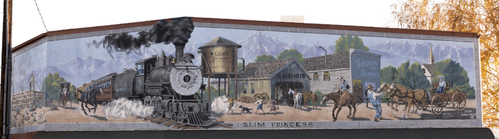
“The Slim Princess”
​by Robert Thomas, John Knowlton and Richard Perkins. 2000

Fendon’s Furniture store, north wall. 13' x 68'
This mural depicts Laws, a thriving railroad depot and community, just outside of Bishop circa 1909.
The railroad line, called the "Slim Princess" by the local population, was a major transportation resource until Highway 395 was paved and improved.
The depot was built in 1883, and served the Owens Valley until April 30, 1959, when the line from Laws to Keeler was abandoned. Laws is now home to:
​

"Laws Railroad Museum"
175 East Pine Street, Bishop, Ca

Picture
Listed on the National Registry of Historic Places by the U.S. Department of the Interior, and designated by the State of California as Historical Landmark # 953, the Laws Railroad Museum and Historical Site is not just another train museum.
Located on the site of the Laws Railroad station and rail yard, the land, 1883 depot and other buildings, and the last train, were donated to Inyo County and the City of Bishop by the Southern Pacific Railroad in 1960.
At the time that the railroad shut down its operations, the village of Laws which had grown up around the rail yard had disappeared. That village has been recreated by moving in historic buildings from around the Owens Valley.
And…  "The Mule Museum"
Picture
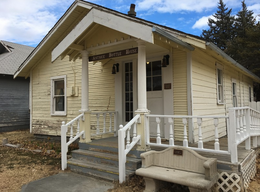
The original railroad town of Laws had a depot of course, and the Station Agent’s House at Laws has been there since 1883. It did not have a mule barn. The Carson and Colorado Railroad in fact largely took the place of the mule freighters who hauled ore from the Owens Valley mines for more than a decade before steam locomotives appeared on the horizon. But before trains, mules ruled. And a very good job they did indeed.
The Mule Museum at Laws is the culmination of work by the Death Valley Conservancy and others dedicated to the history of the role of mules in the colorful and complex story of Owens Valley history.  Bishop, “Mule Capitol of the World,” has hosted the Mule Parade each Memorial Day weekend since 1970, but even many locals are unaware of the astonishing and extensive role mules have played in our local history and culture.
 In Owens Valley’s 20 th Century, Mules have hauled equipment and supplies to build the aqueduct to divert water to the City of the Angels, brought materials for the South Lake and Lake Sabrina dams, and hauled construction components for wagon and automobile roads, electrical, telegraphic, and telephone lines. Surrounded by public lands, we have employed mules to build trails for the U.S. Forest Service and National Park Service, and to promote pack trips for tourists visiting these lands. We would not be who we are without the help of these four-footed beasts...
​


Picture
AND…  
​
the  “Bottle House”

Whisky, Tea, and Snake Oil... and Fine Dining Too!

The newly opened Bottle House at LAWS is a must-see addition to Inyo County’s Western History. The exhibit in its present form is much more than a collection of colorful glass bottles. The current presentation displays shape, color, and form in the evolution of glass bottles of the late 19th and early 20th centuries. Changes in the techniques of bottle- making: blown, molded, or combined approaches, are also evident if one knows what to look for.

If you thought this was a dead-end for FASCINATING ART,
Let me assure you, this is actually a perfect segue
​to my latest series of paintings!

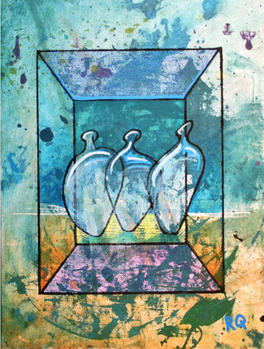
Check out my ‘Vessels’Vessel Series series HERE!
​

Picture
0 Comments

Michelangelo, Underground Graffiti Artist!
12/18/2023

0 Comments

 
Picture
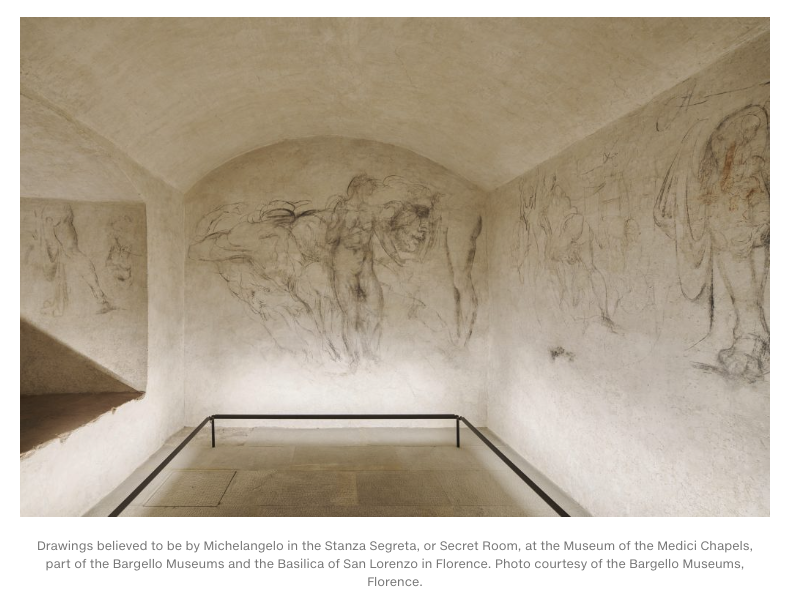
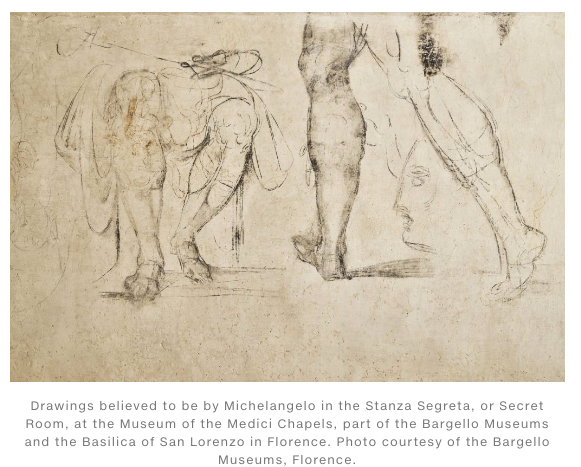
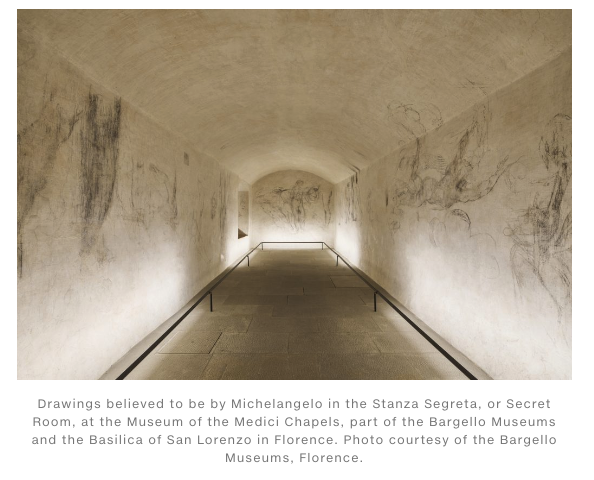
A Secret Room in a 16th-Century Italian Chapel, Where Michelangelo Hid—and Drew—for Months, Opens to the Public!

by Sarah Cascone, October 31, 2023
Michelangelo is believed to have made the rarely seen drawings while in hiding after the pope sentenced him to death.
Guidebooks to the Italian city of Florence have long noted that the Basilica of San Lorenzo is home to a secret room believed to have been decorated by Michelangelo while the famed Renaissance master was in hiding from the pope for two months in 1530. Now, the chamber, which is part of the the Museum of the Medici Chapels (itself one of the fives sites of the city’s Bargello Museums​), will be open to the public for the first time.
Picture
“The completion of the works on the new exit and the adaptations to align… with safety regulations, will allow the opening of Michelangelo’s Secret Room—an extraordinarily fascinating place, but extremely delicate due to… the narrow space… and… the need to protect the charcoal drawings found on the walls,” Massimo Osanna, director general of museums in Italy, said in a statement.
The stunning drawings of the Stanza Segreta, or Secret Room, were rediscovered in 1975. That’s when Paolo Dal Poggetto, then director of the Museum of the Medici Chapels, tasked restorer Sabino Giovannoni with trying to clean part of the walls of a narrow chamber beneath the church’s mausoleum, which had been designed by Michelangelo in 1520.
The corridor, measuring about 32 feet long, 10 feet wide, and eight feet tall, had been used it to store coal, until it had been sealed shut some 20 years prior. It was accessible only by narrow stairway beneath a trap door that had been concealed beneath a wardrobe amid a pile of unused furniture and decor.
Picture
The initial plan was to potentially create a new tourist entry and exit point from the museum. But what Giovannoni found changed everything. Hidden under two layers of plaster, he soon realized, the walls were covered in large-scale charcoal and red chalk sanguine drawings executed with the confidence and ease of a master draftsman.
“The moment you enter that room you simply are speechless,” Paola D’Agostino, director of the Bargello Museums, told the New York Times, adding that as your eyes adjust to the low light “you start seeing all the different drawings and all the different layers.”
But why would Michelangelo have been sequestered in this subterranean space, with just a single window letting in light from the street above?
At the time, the artist’s main patrons, the Medici family, had just returned from exile, having been overthrown by a populist revolt in 1527. Because Michelangelo had worked on behalf of the republican government, supervising the city’s fortifications, Pope Clement VII—a member of the family—had sentenced him to death.
Picture
Hiding beneath the basilica was a way for Michelangelo to lay low until he was back in the pope’s good graces. Fortunately, the Medicis ended up forgiving Michelangelo about two months later, lifting the death sentence and allowing him to leave his (freshly decorated) hiding place to resume work on the family’s tombs at the basilica.
Most scholars are in agreement that the chamber’s sketches appear to be the work of Michelangelo.
If you want to judge for yourself, be forewarned that there will still only be limited access to the Secret Room. The museum is making just 100 tickets—priced at €32 ($34), including access to the Medici Chapels—available for each week, with 15 minute slots for groups of four. There is a 45-minute gap between each visit, to limit the works’ exposure to light.
​

Sarah Cascone
Senior Writer
Sarah Cascone is a senior writer for artnet News, where she has worked since its 2014 launch. She is the co-founder of Young Women in the Arts, and was previously on staff at Art in America. A native of Northport, New York, she went to Fordham University in the Bronx, graduating magna cum laude from the honors program with a double major in visual art and history.
0 Comments

Re(?)-Visiting: ‘ART IN THE STREETS’ at MOCA, 2011

10/16/2023

0 Comments

 
Picture


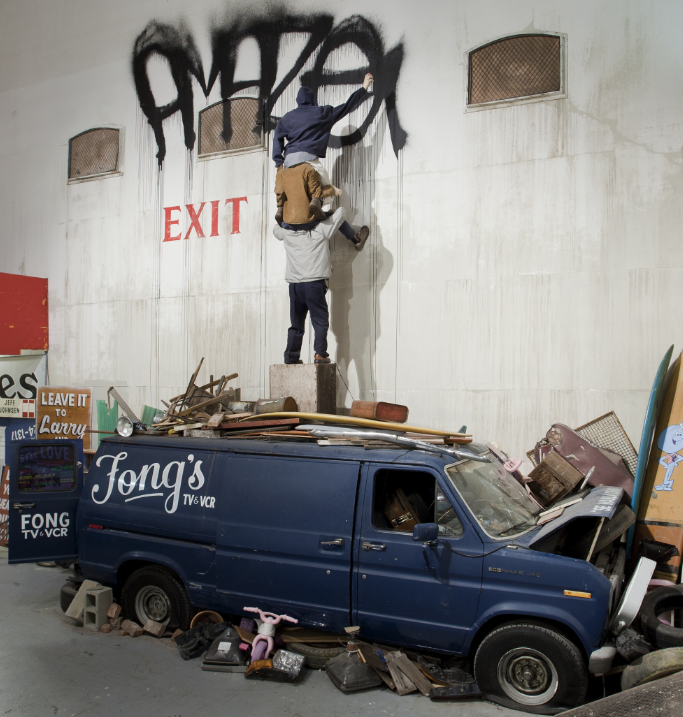
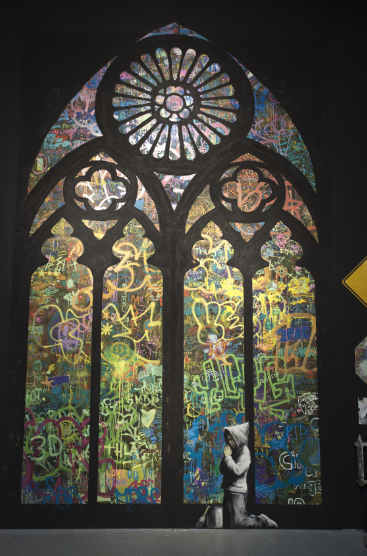
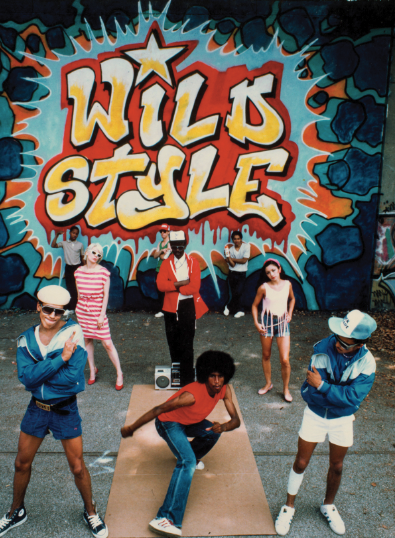
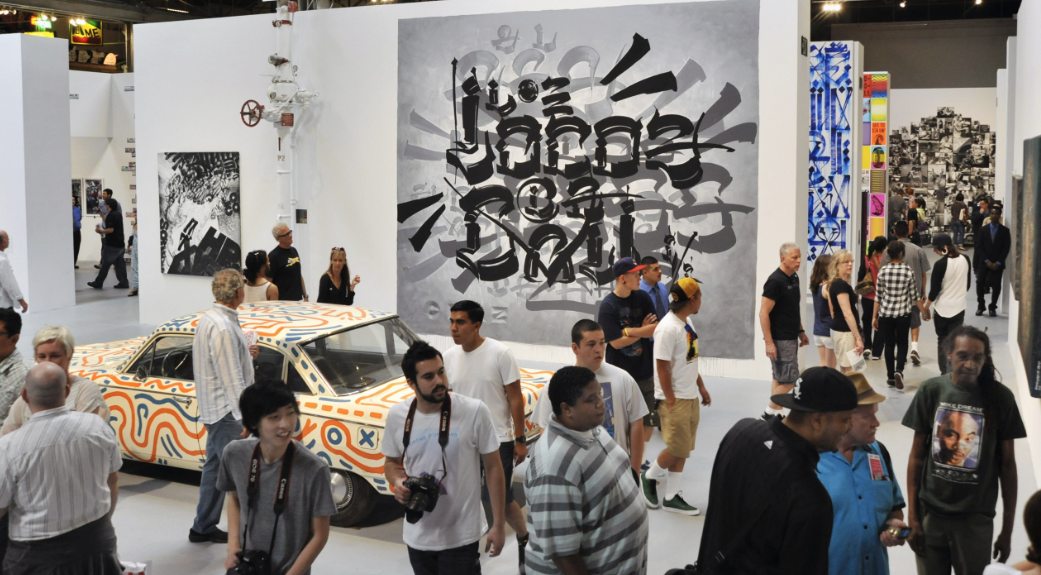
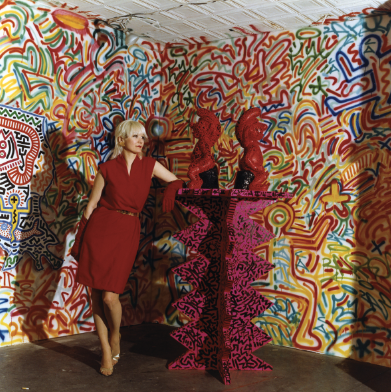
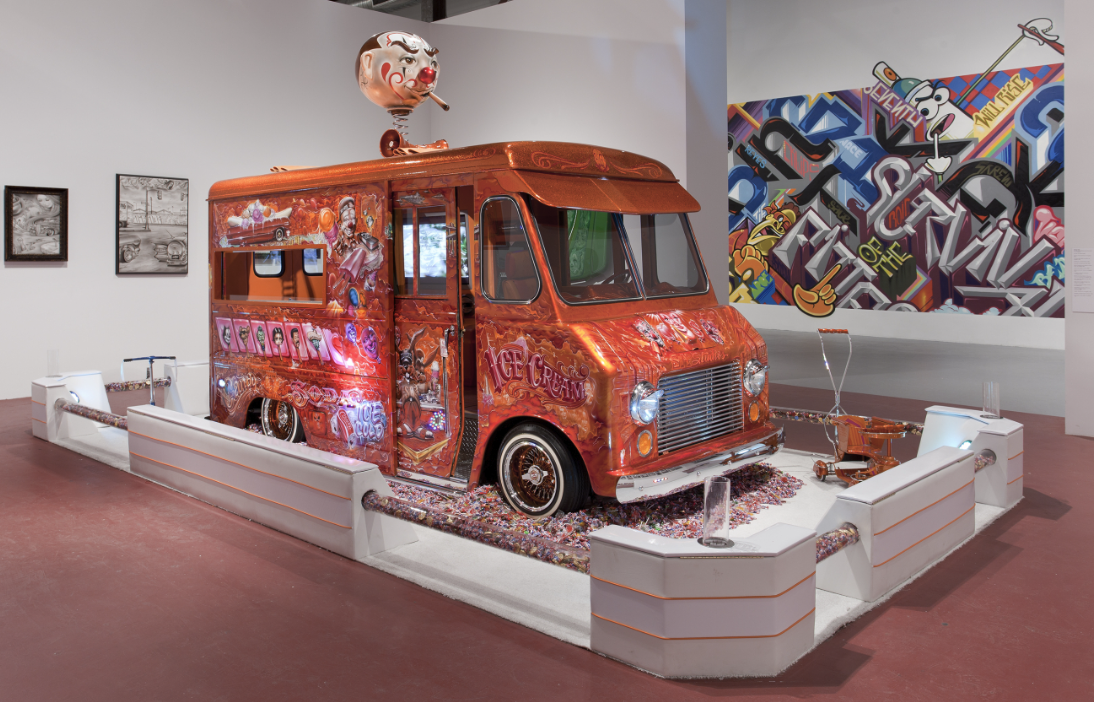
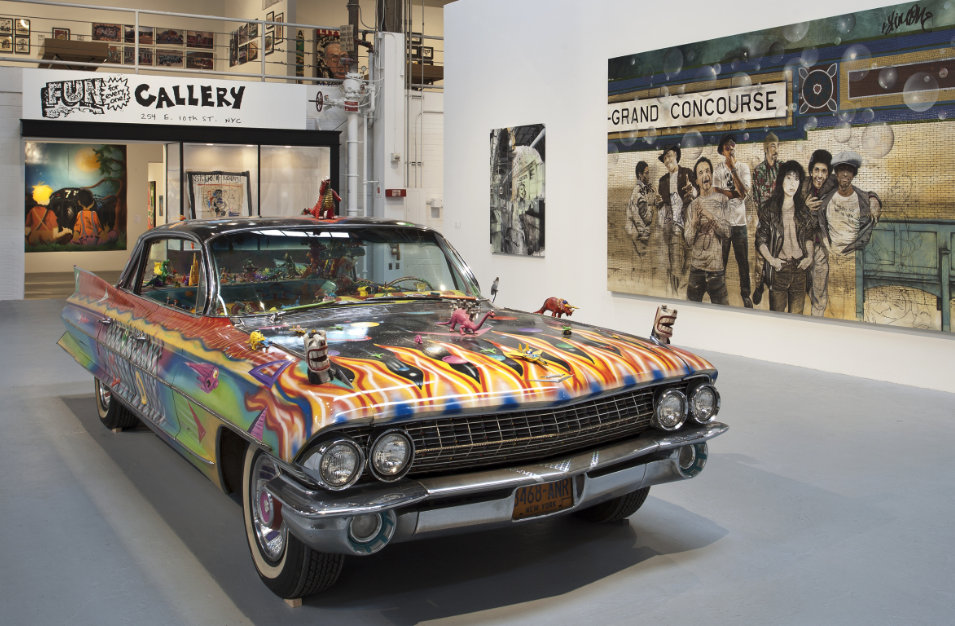
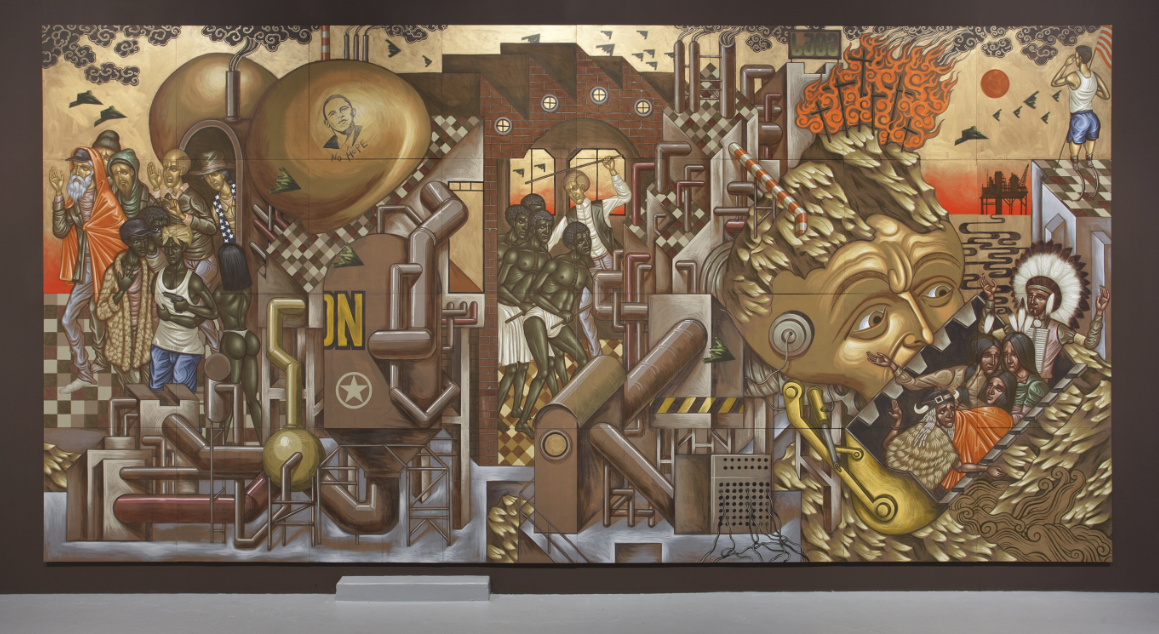
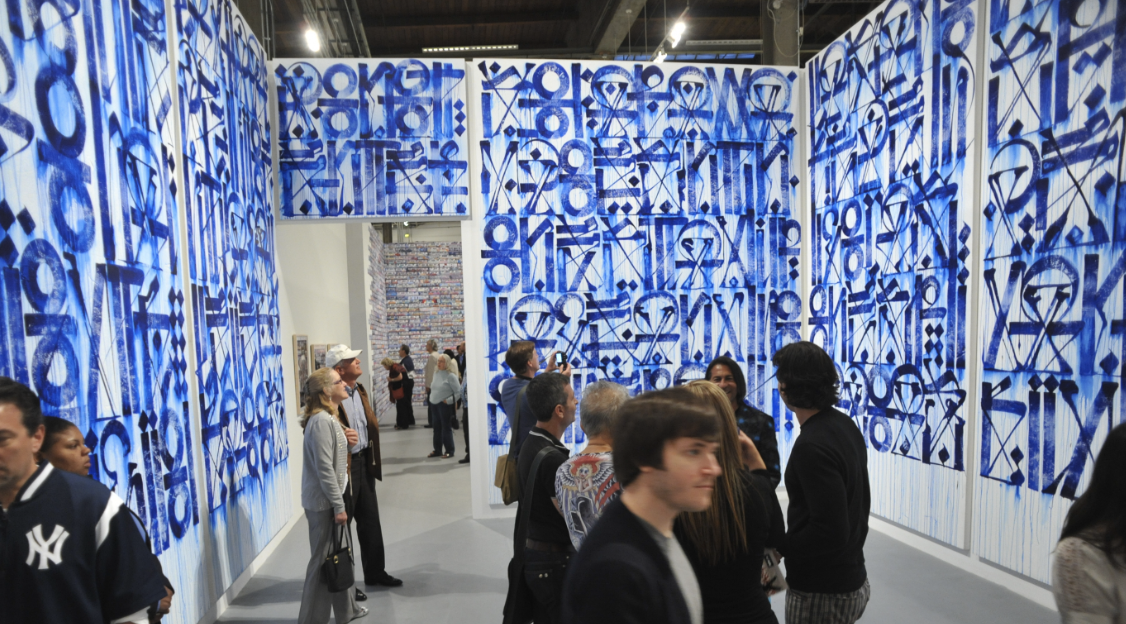
This exhibition took place at
The Museum of Contemporary Art,
​ Los Angeles, California
 
​in 2011.

​
Art in the Streets
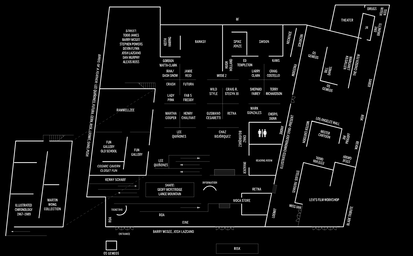
The first major historical exhibition of graffiti and street art organized by an American museum, surveys the origins and history of the movement in the United States and traces its influence as it spread around the world.
​
“O.K. so... I wasn’t actually there, and I don’t remember paying a whole lot of attention to the ‘Taggerz’ the, and to the ‘Throw-ups’ and the whole ’Self-Abuse-as-Art’ scene at the time… I was busy making money doing super-graphics and other large-scale mural projects that people were actually paying me to paint… but my Crew and the Kidz over in R&D said the show was pretty cool and well worth a visit!
​
So here's a re-visit to the MOCA website, designed to document this now legendary exhibition.”
-RQ
​​
Art in the Streets 
​was the first extensive survey of the history of graffiti and street art to be presented in an American museum.
The exhibition traced the trajectory of street art from TAKI 183 and his Greek American friends in the Washington Heights neighborhood of New York to contemporary innovators like Barry McGee, Banksy, and Swoon who have helped to inspire a new global audience.

​The exhibition attracted the highest attendance in the museum’s history.
​
Picture
Barry McGee, Street, 2011, Mixed media installation
 
Picture
Banksy, Untitled, 2011, Mixed media installation
Art in the Streets
 included works by over one hundred artists from more than twenty cities.
The exhibition took place at the
Museum of Contemporary Art,
​Los Angeles

​
from April 17 to August 8, 2011,
and included a historical timeline documenting the most important developments in street art from the early 1970s to 2011.
Picture
Wild Style mural by ZEPHYR, REVOLT, SHARP, New York, 1983
The show focused on major innovations
such as the invention of Wild Style in New York, 
Chaz Bojórquez and Cholo graffiti in East Los Angeles, and the heritage of Jamie Reid’s punk graphics in London.
​
Picture
Chaz Bojórquez, Tres Placas (Three Tags), 2011, Acrylic paint on wall and Keith Haring car
Several key venues in the history of street art were recreated, including the seminal
​ Fun Gallery and RAMMELLZEE’s entire studio, with his letter racers suspended from the ceiling.

​
Picture
Patti Astor at Keith Haring’s exhibition, FUN Gallery, New York, 1983. Photo: Eric Kroll
An entire wing of the museum was devoted to a new version of the celebrated Street Market, created by Barry McGee, Stephen Powers, and Todd James.
A gallery memorialized the work of
Dash Snow surrounded by works
by his IRAK crew.


The show featured ambitious installations by artists including Os Gemeos, Banksy, Shepard Fairey, RETNA, and  Swoon
and an immense outdoor mural
orchestrated by Lee Quiñones.


Los Angeles legend Mister Cartoon created an installation around his famous ice cream truck, which he spent years customizing and painting.
​
Picture
Mister Cartoon, 1963 International Ice Cream Truck, 1995-2011, Urethane enamel candy paint on truck

​There was an extensive section on the art
that emerged from the Los Angeles surf and skate subcultures,
featuring films by Spike Jonze,
conceptual posters by Craig R Stecyk III,
and an enormous photo collage
by Ed Templeton.


NECK FACE created a frightening trash-strewn and graffiti-scarred alley
where he lay in the gutter dressed as a bum, sometimes terrifying unsuspecting visitors.


Cars customized and painted
by Kenny Scharf,
and ​Keith Haring greeted visitors
at the entrance.
​
Picture
Installation view of Kenny Scharf, Untitled (car), 1981, with FUN Gallery in background and paintings by Lee Quiñones
Artists from around the world were invited to create works for the show including
Stelios Faitakis from Athens,
MISS VAN from Barcelona,
 MODE 2 from Mauritius,
 ROA from Ghent,
and JR from Paris.
Picture
Stelios Faitakis, The Legacy of Decline, 2011, Latex paint, acrylic paint, and spray paint on wood panels
A large section was devoted to Los Angeles artists including REVOK, RISK, and SABER.
PictureView of murals by RISK, REVOK, Mister Cartoon, and Los Angeles artists; "heaven" freeway sign by REVOK above; and painted Chevy car by Mister Cartoon. Photo: Brian Forrest
There were galleries devoted to artist/photographers Gusmano Cesaretti, Martha Cooper, Henry Chalfant,
Estevan Oriol, KR (Craig Costello),
Terry Richardson, and TEEN WITCH,
and filmmakers Bill Daniel 
​and Charlie Ahearn.


A special arrangement was made
for  Banksy and his crew to work late
at night with the security cameras shut off
after all the other artists had left.
He created a show within the show in addition to an outdoor steamroller installation. 
Banksy had agreed to participate in the show on two conditions:
One, that there be at least one day a week of free admission,
and two, that photography would be permitted.
The museum administration initially said no
to both requests, being reluctant to forgo the admissions revenue and wary of the legal complications of allowing open photography.
In 2011, almost all museums still prohibited photography.
In response, Banksy immediately sent the museum a contribution to cover the estimated lost revenue on the free day.
Solving the photography challenge
was more difficult.
Letters had to be written to the copyright owners of every artwork in the show.
All but one of the three hundred fifty rights holders and owners sent back written permission allowing the works to be photographed. 
The results were astonishing.
By the end of the exhibition
 8,500 people were lining up to visit the exhibition on the free Mondays.

Photography in the exhibition became a phenomenon with thousands of images posted online, taking the impact of the exhibition to a different dimension.

In conjunction with the show, large mural paintings were commissioned for the facades of the West Hollywood Public Library
parking garage by Shepard Fairey,
​ RETNA, and Kenny Scharf.

Picture
RETNA, Los espiritus de la calle van a sobrevivir, 2011, Acrylic paint on canvas panels. Photo: Martha Cooper
Picture
https://artinthestreets.org/map
 “The MOCA website also has a really cool interactive map that’s worth checking out. 
​
You can click on the name in the gallery and see a view of that exhibit!”  -RQ
​
0 Comments

Last Judgment, Ceiling Mural 1572-9:  Giorgio Vasari / Vincenzo Borghini, / Federico Zuccari

9/4/2023

0 Comments

 
When I was researching my post for Giorgio Vasari’s Birthday recently, I came across this interesting article on a ceiling mural collaboration by Giorgio Vasari, Vincenzo Borghini, and Federico Zuccari of the Last Judgement for Brunelleschi’s dome in the Florence cathedral, which had remained unfinished after Brunelleschi’s death in 1446.
The walls of the dome, which should have been covered by resplendent gold according to Brunelleschi project, were whitewashed.(!)
Picture
Last Judgment, 1572-9, Florence: Duomo.
It was the Grand Duke Cosimo I de’ Medici who had the idea to paint the dome’s interior. In 1572, he commissioned Giorgio Vasari to paint frescoes on the dome of the Florence cathedral; Vasari was flanked by Vincenzo Borghini, who worked to the iconographic subjects and added other themes taken from Dante‘s Divine Comedy.

VASARI’s LAYOUT
The closest graphic text to follow was based on the mosaics in the Baptistery, divided into rows placed one on top of the other.
Picture
The Florence Baptistery, also known as the Baptistery of Saint John, the patron saint of Florence.
As a great admirer of Michelangelo, Vasari also drew inspiration from thewww.florenceinferno.com/the-last-judgement-michelangelo/ Last Judgement in the Sistine Chapel. 
As a result, the dome (4,000 square meters) was divided into six concentric rows placed one above the other, inside of which were arranged groups of figures separate from each other due to the division of the dome into eight vertical segments.
Picture
 Last Judgement in the Sistine Chapel.
Giorgio Vasari's​ subjects were carefully matched up along the the dividing lines of rows and segments so that the theological pattern could be followed vertically and horizontally.
Starting from the false central lantern at the top of the dome, surrounded by 24 venerable old men from the Apocalypse, each segment is decorated with the four following themes: an angelic chorus with the instruments of the Passion, a series of Saints and Elect, a triad of figures representing a Gift from the Holy Ghost, and a region of Hell dominated by deadly Sin.
In the eastern segment, opposite the central nave, the four themes become three to make space for the great Christ in Glory placed between the Madonna and St. John above the three Theological Virtues (Faith, Hope, and Charity), and followed under by the allegorical figures of Time and the Triumphant Church.
​

ZUCCARI’s  LAYOUT
Vasari died on June 27, 1574, two months after the death of Cosimo I, when he had carried out only one third of the work. Although he had not completed the drawings for the four segments of the cupola and some sketches for the scenes of Hell, the new Grand Duke Francesco I de’ Medici called upon Federico Zuccari, an artist from Urbino, to complete the work.
Work on the frescoes started again on August 30, 1576.
Zuccari, well known in Roman circles, didn’t like Vasari’s style and tried as much as he could to affirm his own originality.
He stopped using Vasari’s method of “fresco” painting, preferring the “dry” or secco method, which was simpler but more perishable, and he changed the physiques of the painted characters, the costumes, the stylistic language, and the color range.
He boycotted the executive delicacy of Vasari, made of subtle color changes, reflections, polished descriptions of ornaments, which are difficult to pick out at such a distance, opting for a painting method that was weak in quality but of great effect, a technique he learned to use for theatrical backdrops.
He portrayed a lively gallery of contemporary personalities among the Elect: his Medici patrons, the Emperor, the King of France, Vasari, Borghini, Giambologna, other artists, and even himself as well as many of his friends and relatives.
As for the Christ in Glory, for which Vasari had left drawings inspired by Michelangelo’s Sistine Chapel, Zuccari preferred to follow the models used by Raffaello (Raphael), which were more in harmony with the sanctimonious rulings of the Council.
Picture
The Triumph of Galatea (1513) by Raphael, which decorates the walls of the Villa della Farnesina in Rome
However, his masterpiece in the cupola will always be his crude rendering of Hell, with its powerful devils inspired by Luca Signorelli’s frescoes in the cathedral of Orvieto, the shameless bodies of the damned, the violent gestures, and the red glow of blood that vividly brings out the dark colors of the composition to life.
​

Picture
Luca Signorelli’s frescoes in the cathedral of Orvieto,

When he finally completed the frescoes in 1579, having also carried out several other interventions and changes on the parts painted by Vasari, Zuccari celebrated the event by preparing a commemorative medallion. However, this did not spare him from the criticism of the Florentines.
The frescoes in the Cupola have never been popular in the city if compared with their counterparts in the interior of the cathedral: they are extremely difficult to look at because they are so removed from the viewer, placed in a dark spherical vault, and they have become increasingly obscured over the centuries by dirt.
However, these frescoes were scrupulously restored between 1978 and 1985, and it is now possible to re-evaluate them and appreciate the power of the cycle and its importance in Florentine art history.
This enormous space allows for an interesting comparison between two different ways of interpreting art rather than an antagonism between two painters: on the one hand we have Vasari, a “conservative” painter and follower of a Tuscan tradition that had been passed down directly from the Middle Ages; on the other, Zuccari, who “imported” the methods of the Roman painter-contractors to Florence, which were based on a poor executive quality but a grandiose final effect.

​Articles from:

Florence Inferno
Florence Inferno is a blog about the Florentine mysteries, symbols, and places that are mentioned in Dan Brown’s novel Inferno,
Picture
And:
​

Picture


​"​Since you have made it this far…

Here is a link to a few of my modest ceiling murals from my virtual portfolio that I was fortunate to have been commissioned to paint." -RQ


http://www.artandsoulproductions.com/ceiling-murals--domes.html
​
0 Comments

Happy Birthday Giorgio Vasari! July 30, 1511

7/30/2023

2 Comments

 
PictureDedicated to the study of Italian art and architecture from prehistory to the present!
Happy Birthday Giorgio Vasari!
The painter, architect, collector, and influential author was born on this day (July 30) in 1511 in Arezzo.
A successful painter and architect in the service of Grand Duke Cosimo I de’Medici, Vasari is best known today for his Lives of the Artists, a collection of biographies from Cimabue through his autobiography. Published in two editions (1550/1568), the text has had a profound impact on the development of connoisseurship, art history, and Italian Renaissance studies.

Picture
St. Luke Painting the Virgin, Photo credit: Web Gallery of Art.
Picture
Self-Portrait, between 1550 and 1567. Florence: Uffizi.
Picture
Apotheosis of Cosimo I / Cosimo I de’ Medici among the Artists of his Court (1563), Fresco ceiling painting by Giorgio Vasari
“I have represented the lord Duke Cosimo triumphant and glorious, crowned by the personification of Florence with an oak wreath” -Vasari

The centre of the entire ceiling’s decorations is Cosimo I de’ Medici: the Duke is wearing a purple cloak, is seen sitting on the clouds and is accompanied by the Ducal crown, the cross belonging to the order of Saint Stephen and finally the Golden Fleece (received from the Emperor in 1545). Surrounding him are the symbols of the city and the insignia of the Florentine Arts. Photo: Simone Lampredi

For more on Vasari, see: 
Julian Kliemann and Antonio Manno.
​“Vasari.” Grove Art Online. Oxford Art Online. Oxford University Press. Web.
[http://www.oxfordartonline.com/subscriber/article/grove/art/T088022pg1].


Picture
An Equestrian Monument for Giorgio Vasari

In collaboration with Paradise for Artists of Pasadena, California, the cultural association Paradise for Artists of Arezzo presents the sixth appointment of a program of events and collective exhibitions to support the project:
"An equestrian monument for Giorgio Vasari
on tour in America and in Italy"

and raise funds to dedicate a bronze statue to Giorgio Vasari, the father of art history, the first art historian.


Picture
 sculptor, Christopher Slatoff,
PARADISE FOR ARTISTS INC 
is a 501(c)(3) Nonprofit Corporation,
​Federal tax ID# 87-0978724

Your donation is tax-deductible to the extent allowed by law.
Picture
Our goal is to create an Equestrian Monument for
the Father of Art History and the First Art Historian
GIORGIO VASARI
​

For any further information
please contact the number (+39) 338 6005593 
or
write to the following emails:
​ [email protected] .
 
www.ParadiseforArtists.org
www.GiorgioVasari.org

​
2 Comments

Teotihuacán Murals

7/17/2023

3 Comments

 
Beatriz de la Fuente
​Teotihuacán Murals Museum

San Martín Centro, Mexico

Excerpts from an article on Atlas Obscura at:

https://www.atlasobscura.com/places/beatriz-de-la-fuente-teotihuacan-murals-museum
​
Picture

​The pigments used to color Teotihuacán murals were sourced mostly from semi precious stones and earth; hematite produced a startlingly bright red, malachite an emerald green, and azurite a deep blue.
​
Picture
One of the many well-preserved wall murals of Teotihuacan. https://www.latinamericanstudies.org/teotihuacan-murals.htm

​ELABORATE MURALS ONCE TATTOOED THE walls of thousands of residential complexes across ancient Teotihuacán. Today, many of them live in an unassuming museum within the archaeological site: The Beatriz de la Fuente Teotihuacán Murals Museum. Named after Mexican art historian Beatriz Ramírez de la Fuente, the museum houses over fifty millennia-old murals along with several artifacts recovered from on-site temples and palaces.
​
Picture
Teotihuacan fresco. Museo Nacional de Antropologia. Ciudad de Mexico

​The museum
consists of nine main rooms, each with its own thematic focus, spanning space and time. Within the murals, the real and the fantastical merge; a feline donning a feathered headdress sticks out a forked tongue and magnificent birds release fountains of water from their beaks. Human-like figures appear throughout the museum, too, some mortal and others deities. 
​
Picture

​The passage of time, closely linked with astronomical observation, is a recurring theme across murals and artifacts throughout the museum. A small monolith believed to have been used to keep track of time and solstices can be found toward the center of the museum. Two ceramic jars, along with eighteen obsidian blades and a human femur, found in an astronomical observation cavern are also on display.
​

Picture
https://www.picfair.com/pics/06542777-wall-mural-of-jaguar-palace-of-tetitla-teotihuacan-archeological-zone
Wall Mural of Jaguar, Palace of Tetitla, Teotihuacan Archaeological Zone, UNESCO World Heritage Site,
​State of Mexico, Mexico, North America

Picture

​Know Before You Go
The museum is open to the public Tuesday through Sunday from 8 a.m. to 5 p.m. The fee for general admission, which includes entrance to the archaeological zone, is 80 pesos. 
3 Comments

Art Exhibition Review!

6/12/2023

2 Comments

 
Picture

Mindscapes: New Paintings
and Retrospective
 

by Roberto Quintana 
​

Picture
Here's a link to a Video!
Picture
June 2, 3, and 4, 2023
at
​The Pasadena Antique Warehouse Gallery
"What a great show this turned out to be!
I am very proud of the way the exhibition turned out!
All of my work looked Fantastic in the Warehouse
​Gallery space, and the turn-out was great!

Here are some pix of the Show!
​
Picture
"I really enjoyed getting a chance to visit with all of my friends and family, and all of my patrons and clients who showed up for my exhibition. What a great time we all had!!"
​

Picture
Here are a few of the responses we received
​from our guest book and emails:
Picture

    “Our whole family enjoyed your show. It was so wonderful to see so many of your paintings new and old. Just amazing.  I have so enjoyed the first painting we have of yours and look forward to the new one.
    Both of these paintings are meaningful to me… Your first one came after my second breast cancer in January of 2015.  Both paintings mean 'moving on' and 'experiencing joy in one day at a time' for me.  I often lay in bed and look at your painting, and another painting I enjoy that inspires me.  Since then I joined an art class and am part of a group of women artists whose skills range from beginners to outstanding.  We have a class two times a month, and I Zoom-link the other two weeks, so we chat and make art together.
    The process of painting and drawing is healing and restoring for me.”  -Cheryl
​
Picture
“Hey, Roberto!
What a pleasure to be here and to share in your Soulful Delights!!!”

     -Paul and Michele

“Thank you for the beautiful artwork! We cannot wait to come to your next show!!”
     con amor, -Daniel & Alegria

“So great to be able to see your work!”
     -Gloria y Antonio


“Keep up the spirit and the work.”
     Love, -Jim

“Congratulations on your wonderful, fabulous, and inspiring art show Roberto!!!”
     Best wishes, -Govindini & Jason

Picture
“So very happy to be here! My friend forever,
here’s to another 50 years.  
:)
Wonderful showing!"
     -X0 Nisa


“Dang! All these artistic folks have nice looking penmanship.
I don’t, but I want to say how wonderful the art is in here. Great job Roberto.”

     -Roger

“Your show is Fantastic!!! Your art is memorable in several ways!!! Your personality is so amiable and inclusive!!!
Thank you for sharing talent and spirit!!!”

     -Lynn and Tom

“Good Job! I like your paintings”
     -Andi  :)

“Roberto-
You are so talented!
I love how you combine science & engineering with
spirituality & soul. It’s wonderful to explore and connect different dimensions of our spirit
. We love you!"
     -Love, Laura


“Overjoyed to see your work!”
     -Jeff

Picture

“Always inspired by your creative soul,
and the art that invites us to reflect on your journey”

     Love you bro! -John and Janet

“Roberto, Loved seeing your work.
Thanks for letting us know!”

     -Sue & George

“Congratulations Roberto! You are so talented! Wonderful evening!”
     -Rolin & Michael

“L’art best fantastique!”
     Merci -Connie

“It’s great to see you and your work again!”
     -Mary :)

“Roberto- 
So wonderful to see your work today!
We loved it! & we love you!”

     <3 Kate   <3 AJ

“(Beautiful Asian script that I cannot read!)”
     -Florence
​

Picture

-AND-
a special
“Thank You”
to everyone involved in putting the show together!

____________________

Chris Agazaryan: Empresario Extraordinarius
The Mindscapes Layers’ Team:
    Athena Agazaryan
    Gohar Torosyan
    Rebecca Agazaryan
    Thomas Costan
    Nare Haykazyan
    Andranik Safaryan

_______

The Green Street Jazz Trio
    Ron Cyger on sax, 
    Dave Askren on guitar,
    Larry Muradian on bass.


Elaine Partnow
performance artist


Judy Barrat
 Poetry


Sue Witkovsky
 Special Editor and All-Around-Grande-Dame


Angel Gonzalez
‘Angel’ wrangler


Kate at Random Framing
framing and special materials
consultant


Larry Lousen
Last minute ‘Art Show’ sign


Picture
-AND-
a Very Special Thank You to:

John and Janet Quintana
Dan and Cindy Yowell
Ray and Yolanda Quintana

Cheryl and Bob Ooten
Mike Cedeno
Roz and Joe Witt
Alegria Garcia

​
Picture
2 Comments

The Pasadena Warehouse Gallery presents/  Mindscapes by Roberto Quintana: New Paintings and Retrospective

5/15/2023

4 Comments

 
Picture
-Mindscapes-
are interior landscapes—paintings exploring the realms and technologies of perception, science, aesthetics and the technologies of instinct: symbolism, myths, dreams,
and the psyche.

These abstract and surreal paintings
are visual poems about our embedded reality. They explore the foundations
and the structures of consciousness,

interior realms of perception
and our various ways of knowing
​and being.
 
Picture


Dates/Times:
Friday, June 2nd
​OPENING NIGHT

Gallery Open 5pm - 10pm
Ron Cyger Jazz Trio (7pm - 9pm)

​
Saturday, June 3rd
Gallery Open 5pm - 10pm
Ron Cyger Jazz Trio (7pm - 9pm)
Spoken-word Performance
by Elaine Partnow


Sunday, June 4th
Gallery Open 5pm - 10pm
Ron Cyger Jazz Trio (7pm - 9pm)
Spoken-word Poetry
​by Judy Barat


​​Entrance to this event is
FREE


​RSVP is appreciated... 
Picture

Event and Exhibition Address:
"You can't miss it!
It's the building with
the cool mural!"


-Pasadena Antique Warehouse-
1609 E. Washington Blvd,
Pasadena, CA 91104


Contact us at
​(626) 404-2422
-or-

​[email protected]
​

Contact the artist directly at:
[email protected] 


     In a special effort to set a good example
to all of our elected representatives on the importance of listening to the other side, Roberto has been fiercely negotiating with his Marketing Department and with his banking team over at Collections and Receivables.


     Collections insists on capping our Patron's spending by setting the highest price that the market will allow (which they have determined are the prices quoted below, and elsewhere on this website), while Marketing has this somewhat fanciful idea that lowering the prices of the paintings will somehow magically increase the sales and allow Roberto to serve as many Patrons as possible.


     After weighing both arguments  carefully, and after the usual lengthy and whinny discussions with his guru, and many of the Esteamed Ascended Masters on his internet-thingy device and his Runes...

     Roberto has decided to go with Marketing and all of his new and returning Patrons and offer:
a Whopping! 20% off SPECIAL!
on EVERYTING in his upcoming show at
"The Pasadena Antique Warehouse Gallery"
WooHoo!
4 Comments

Pasadena Antique Warehouse Gallery and Events Presents: Roberto Quintana’s ‘Mindscapes’: New Paintings and Retrospective!

4/9/2023

0 Comments

 
It’s really cool when one of your favorite local patrons
calls you up!
(I painted his portrait, as a Circus Impresario, on his
Antique Shop several years ago)
Picture
...and he says to you:
“Hey, Roberto … I’m not just an Antique Shop anymore!
I’m set up as an Arts Venue and Events Space now also,
with a stage and a great exhibition space.
Everyone loves your mural!
...and I was thinkin’...
it would be great if you wanted to have an exhibition here!”


Well, what could I say!?
I just happened to have a new series of ‘glass vessel’ paintings I was hoping to exhibit in Italy this year,
(but that all got postponed)
so...  “Yes! Let’s do it!”


Well, one thing led to another,
​and the venue was so great,

I realized that not only could I mount
my new 'Vessels' paintings…
but I could also do a complete retrospective of all of my 'Mindscapes' paintings!
​AND
have some of my friends perform and play!
​How great is that!
​
So here we go!
Set aside the first weekend of June:
Friday, Saturday and Sunday
the 2nd, 3rd, and 4th.
We’ll have a BIG Party!
​

If you’r not on my eMail list, and want to be,
just contact me and I’ll keep you updated,
or
contact the Warehouse.

Peace and love -Roberto Quintana
0 Comments

Miami’s Museum of Graffiti.

1/23/2023

3 Comments

 
Picture
​​The World’s First Museum Dedicated to Graffiti!
​Mission Statement
Throughout the late 1960s and early 1970s in large cities all over the United States, children invented a new art form that started with writing their names on walls in their neighborhoods. 

Local governments launched cleaning campaigns and mandated that young writers be arrested for their vandalism, but the movement could not be stopped. Unrelenting young people forged ahead at a feverish pace with creative innovations and inspired generations of new practitioners.

In no time, the wall writings quickly developed to become more elaborate and decorative. Taking on unique and distinguishable signifies like arrows, crowns and other innovations through design and color, this became the blueprint for tags, throw-ups, masterpieces, and the elaborate works seen today.

Fifty years later, the Museum of Graffiti was formed to preserve graffiti’s history and celebrate its emergence in design, fashion, advertising, and galleries. The Museum experience includes an indoor exhibition space, eleven exterior murals, a fine art gallery, and a world-class gift shop stocked with limited edition merchandise and exclusive items from the world’s most talented graffiti artists.


Museum Programming
Picture
SPRAY IT LOUD
GRAFFITI CLASS FOR BEGINNERS
(Every Saturday @ 5PM)
​


Picture
KIDS’ GRAFFITI DRAWING CLASS
LED BY LOCAL ARTISTS
​(Every Sunday @ 10AM)

​

Featured Exhibitions

Picture
From Vandals To Trend Setters...
​There is no complete story for the graffiti world as there are thousands of participants 
in the past and the present.
We are students as much as leaders in this global movement, sharing our enthusiasm 

as we present this exhibit.
Graffiti–the act of writing on walls–is an old practice traced back centuries to churches in England, visitors' names in the catacombs in Paris, and lewd jokes in Pompeii.
Humans have a need to leave public messages, always have and always will.


This exhibition celebrates the graffiti 

of our lifetime, the type of graffiti that has become a global movement and culture started by American children and teenagers.
Style writing or just plain writing 
is what
we 
call it from within the movement.

Today, writing can be found in just about 
every corner of the globe, 
from Helsinki and Berlin to Lima,
Melbourne, and Miami.
Cities have their own indigenous styles 

and passionate practitioners, 
working daily to be seen and heard.
Social media carries the names 

beyond the national barriers, 
but it wasn’t always that way.

Two cities can claim bragging rights to 
the birth of this new graffiti movement: Philadelphia and New York City. 
In the late 1960s both cities were home to teenagers who saw public walls and trains as a perfectly natural and acceptable place to sign their names, breaking the law but adding a new spin on the typical gang graffiti 
that was already present in the streets.
 These teenagers were bold, adventurous, and sought fame and recognition from their friends.

The global expansion of New York City’s 

graffiti style ​caused a stir in just about 
every city it appeared in. 
Trains and walls were covered, spray paint was stolen from shops, teenagers adopted the new cultural import, and adults had a hard time accepting it, leading to strict laws, 
arrests, and severe punishments. 
Of course, the writers suffered... 
but they also adapted, innovated, 
and changed to thrive and survive. 
Writers plotted and transformed the culture 
to their favor. Some took to graphic design, tattoo art, fashion design, and murals, 
while others turned to hidden walls 
or freight trains to pursue the writing tradition, and a few continued to paint trains 
accepting the risk of more severe penalties. These artists influenced the world and continue to impact popular culture today.
This is a small part of the story.

__________________
​


Picture
​OLÉ  
A body of works by
ISE, FINOK, THIAGO NEVS, & SKOLAS
of Sao Paolo's VLOK Crew.
​

​
Ise, Thiago Nevs, Finok, and Skolas,
​while individually being studio artists,
​are all graffiti artists from São Paolo, Brazil.
The artists have come together as a collective, embodying four different generations of graffiti artists, to present a body of work that is not representative of their traditional graffiti
but rather communicates their shared life experiences as artists in their communities.

Their paintings depict self-portraits, street landscapes, and average citizens in an effort to highlight their deep love for all aspects
of the graffiti art movement,
not just the letters themselves.
The paintings, steeped in culture, present artifacts and symbols that are inherent in the fabric of both current daily life and history
in Brazil.  Soccer balls, Bahia bracelets, religious shrines, tags, and flying kites are all integrated in a way that convey
an admiration for a city rich in personality
that serves as their inspiration.  

The artists tap into folk art traditions and use colorful patterns, fabrics, found objects,
and assemblages to transport you to
Brazil and share some of the widely unknown and indigenous aspects of their nation
while also calling attention to the daily economic and social issues
​that are present today.

​__________________
​


Picture
Writers on Wax:
​The Sound of Graffiti

An exhibition that pairs
the beats, basslines, imagination,
and expression of graffiti writers’
​who make both music
​and visual studio work.


Graffiti has historically been interconnected with certain types of music like punk rock, techno, and Hip-Hop. Commonalities like the use of public space, themes of rebellion and angst, and the “do it yourself” mindset are threads that run through the fabric of these art-forms. These congruities and the urban environment from which they originate have naturally led graffiti writers to experiment within these musical genres and vice versa.

Writers on Wax is a project created by Ruyzdael Music, a group of Dutch graffiti writers and creatives who saw the importance of compiling the music created by graffiti writers. Their vinyl-only project, Writers on Wax: The Sound of Graffiti, is a series of albums that feature exclusive tracks created by today’s leading visual graffiti artists from around the world – some who have alter-egos in the music world. All three of their vinyl music releases are on installed along with old-school turntables for your listening pleasure.

In the visual portion of the exhibition,
graffiti reigns supreme.
BLADE (Steven Ogburn, New York, b. 1957) via photographs by Martha Cooper,
DELTA (Boris Tellegen, Amsterdam, b. 1968),
NUG (Magnus Gustafsson, Sweden, b.1972), Paul Du Bois Reymond (Amsterdam, b.1974), and
PURE (Aindriais Dolan, New York, b.1969) each draw on their deep roots in graffiti
to present a wide range of styles
from pioneering lettering,
to using the spray paint medium
for abstraction,
to addressing the landscapes in which graffiti and their practitioners occupy,
and using the ornate aspects of graffiti
to create a composition.


Collectively, the pairing of the visual works
with the artist’s musical creations
provides a holistic snapshot of the
collective urban inspiration and output
​of these multidisciplinary artists.  


This program is supported as part of the Dutch Culture USA program by the Consulate General of the Netherlands in New York.

__________________
​


The Museum of Graffiti exhibits, educates, and celebrates the thousands of graffiti artists who have transformed walls in our public spaces into vibrant masterpieces.
3 Comments

A Purple Party… and a Princely Mural!

1/16/2023

0 Comments

 
Murals On The Street!
"Many times I come across some really nice mural, or a hand painted sign out there that I want to share with you!
This one is from my dear friends Daniel and Lois who were back home in Minnesota last May and they sent me this great photo of the street party and unveiling of Hiero Veiga’s ​new mural of TAKAPrince Rogers Nelson-(TAFKAPrince!)" -RQ
​
Picture
​Mural by 33-year-old Hiero Veiga, a Florida street painter known for the rendering on the exterior wall
of Miami’s Museum of Graffiti.
Organizers say the $500,000 Minneapolis project
​has been in the works for seven years.​

​June 3 2022
Purple party: Prince fans celebrate mural completion in downtown Mpls
By Tony Kiene
     On the same day that the Queen of England celebrated her Platinum Jubilee in London, Minneapolis honored its very own monarch: His Royal Badness, Prince Rogers Nelson. A 100-foot-tall mural of our favorite son, painted by internationally renowned artist Hiero Veiga, now looks out over the city’s entertainment district and the legendary music club that Prince established as an international landmark almost 40 years ago.
     Last night’s event, billed as the “Purple Block Party,” saw throngs of people descend on First Avenue North, including many Prince fans from out of state and around the world, here for this weekend’s Celebration 2022 at Paisley Park.
     A little after 9 pm, the dynamic duo behind the mural, also known as the “Crown Our Prince” project, graced the stage for the first time. With the blessings of Prince himself, it was Sharon Smith-Akinsanya, CEO of the Rae Mackenzie Group, and public art expert Joan Vorderbruggen, that conquered a multitude of roadblocks to successfully carry out this seven-year project “across the finish line.”
     Things became a little emotional when they introduced two of Prince’s sisters, Norrine and Tyka Nelson, each of whom spoke to the crowd.
     Tyka mentioned some of the many ways downtown has been important to their family through the years, recounting how she and Prince would often catch the #19 bus over North, and then, with transfers in hand, make a pit stop at Shinders bookstore on Hennepin Ave. before continuing on to their destination.
     Norrine Nelson spoke to the crowd, promising not to cry. She closed by telling those gathered to honor her older brother, “Thank you for loving him. He loved you.”
     Smith-Akinsanya and Vorderbruggen then returned, and after acknowledging the major sponsors, additional contributors, and the three photographers whose images served as the basis for the mural, further hyped up an already electric crowd, before introducing artist Hiero Veiga, 
     The unassuming and soft-spoken muralist did not address the audience, but no doubt felt its love and appreciation as he embraced Vorderbruggen and Smith-Akinsanya.
     Finally, as the opening chords of “Purple Rain” reverberated through the nearby streets and skies above Minneapolis, Veiga’s masterpiece was doused in brilliant light, officially dedicating the mural and fulfilling the promise to 'make Minneapolis shine purple.'
     DJ Mickey Breeze closed out the night with a more adventurous set the second time around consisting of a couple of classic Prince B-sides, including “Violet the Organ Grinder,” in which Prince repeatedly declares, “I’ll die, but I won’t go away.” That certainly rings true to all his fans. And though he didn’t end with it, Breeze’s inclusion of “It’s Gonna Be A Beautiful Night,” recorded live in Paris on the 1986 Parade Tour, proved to be the perfect depiction of the night’s festivities.
Hiero Veiga
a Florida street painter known for the rendering on
the exterior wall of Miami’s Museum of Graffiti. 
​Bio 
“I am obsessed with the practice of my craft.” 
Hiero Veiga grew up in the small boxing town of Brockton, MA
and has been spray painting since he was 12 years old.
With over 21 years of experience, Hiero has evolved from writing graffiti to curating hyper-realistic pieces ranging from portraits, natural scenery, and psychedelic art.

Hiero’s unique perspective and experience of light and color is reflected in his distinctive compositions. His current personal work style involves abstract backgrounds and kaleidoscopic designs with Groucho glasses, chattering teeth,
and rubber ducks.

Hiero has participated in countless mural festivals and collaborated with numerous artists in his community. His most prominent works were done in participation with Pow Wow! Mural Festivals, including a mural displayed in the 
Bishop Museum in Honolulu, Hawaii.

Hiero is based in Florida, but you can find his work in the streets, businesses, and galleries across the United States, Jamaica, and Canada.
If you are interested in working with Hiero,
please fill out the contact form or directly send an email.

© 2022 HIERO VEIGA. ALL RIGHTS RESERVED.

Picture
​Article By Tony Kiene
Tony Kiene’s experience in the Twin Cities nonprofit and entertainment industries includes work with Minneapolis Urban League, Penumbra Theatre, Hallie Q. Brown, and Pepé Music.
He welcomes reader responses to
​ 
[email protected].
​
​Related Stories:
​
Artist Hiero Veiga now painting Prince mural in downtown Mpls

Honoring Prince: community reactions to new street sign and mural
​

Picture
​“This all reminds me...
​ of the work Christina Rosenthal and I did
for Prince’s nightclub ’Glam-Slam’ in L.A.
​ and at his Paisley Park Studios in MN.
           Here’s a link to that project…" 
 
-RQ


​Glam Slam and Paisley Park Studios

Picture
www.ChristinaRosenthalFineArt.com
0 Comments

Murals in LA Lift the Voices of Iranian Protesters

1/2/2023

2 Comments

 
Picture
Mural by Katrine Karimpour (photo Matt Stromberg/Hyperallergic)
Picture
Article by Matt Stromberg 
​December 14, 2022
Murals by Iranian-American artists across the city are inescapable reminders of the regime’s ongoing brutality.
Drive north on Main Street through Los Angeles’s fashion district and a striking new mural is visible just past Interstate 10. Against a backdrop of green, white, and red — the colors of the Iranian flag — the faces of 13 women who have lost their lives at the hands of the Iranian regime are depicted in stark black and white. Below them, their names, and others, are written on the palms of outstretched hands. Most of them were killed during the recent protests in response to the September death of Mahsa (Zhina) Amini, who was detained by Iran’s morality police for not wearing her hijab correctly and died in custody. “Women, Life, Freedom,” the originally Kurdish slogan that has become a rallying cry for the protests, is written in English and Farsi.

The mural is the work of Katrine Karimpour,​ who was approached by her friend Mojgan of Mona_E_Arts with a concept for the mural and a connection to the owners of the building at 1605 S. Main Street. Karimpour created the image on her iPad and it was then printed on two large panels of weather-resistant paper and hung on the building’s southern facade on November 27. The mural is just one example of Iranian-American artists in Los Angeles showing solidarity with the protesters in Iran.

For Karimpour, it is also a way to express a connection with family, despite the tumult of revolution and emigration. Her late grandfather and mother fled Iran just before the 1979 Revolution. “When it started, they said they would come to the US for a week til it died down,” but they ended up staying,” she told Hyperallergic. “[The regime] took all my family’s belongings, everything my grandfather had worked for, everything he owned.” She says her grandfather wrote poetry; however, she couldn’t read it, since she was never taught Farsi. 
“Doing this, I thought about my baba the whole time,” Karimpour said of her work on the mural.

About 10 miles northwest of Karimpour’s mural, a nearly three-story-tall image of Mahsa (Zhina) Amini graces a wall in Fame Yard on Melrose, a hotspot for street art. Her hair, colored green, white, and red, spills out from her hijab, while the chains covering her head break apart.
Picture
Mural by ​Cloe Hakakian​​ and Todd Goodman
(photo by and courtesy Impermanent Art)


Cloe Hakakian
https://www.instagram.com/cloehakakian/

https://beyondsquarefootage.com/beyondsquarefootage/2020/5/14/cleopatra-by-cloe-hakakian

Todd Goodman
https://todd-goodman-art.myshopify.com/
​

“I used to stay away from everything political, but this is personal for me. This is not political, it’s about basic human rights,” artist Cloe Hakakian, who created the mural with Todd Goodman, told Hyperallergic. ​Hakakian was born in the US to parents who had emigrated shortly before the revolution, “Otherwise I could have easily been one of those girls,” she said, referring to those killed in the recent demonstrations, 
who are in the hundreds.

​
Iran has already executed two people involved in the protests, with 25 others facing the death penalty, according to the Guardian. On Monday, Majidreza Rahnavard was publicly hanged from a crane in the city of Mashhad. He was accused of killing two members of the Basij militia. Last week, Mohsen Shekari was executed after he was convicted of “waging war against God” by a revolutionary court. He had been accused of blocking a street and injuring a militia member. Today, the United Nations announced its decision to remove Iran from its Commission on the Status of Women, thanks in part to campaigning by activists in the diaspora.

Since the mural went up in early October, Hakakian has shifted gears, connecting artists with building owners willing to offer up their walls for murals in support of the “Woman, Life, Freedom” movement through her​ “Murals for Freedom” website. The site lists murals across the globe, in San Diego; Washington, DC; London; Paris; Berlin; and Sydney, Australia. “Not all the artists are Iranian,” she notes. “It’s inspiring a lot of people outside of the community.”
​
Picture
Mural by Rashin Kheiriyeh (courtesy Farhang Foundation)
Further West, in Santa Monica, the side of an office building now bears Rashin Kheiriyeh’s mural of a woman’s silhouetted head in profile, her hair rendered in sinuous, turquoise Persian calligraphy. Kheiriyeh created the mural before the death of Amini for a mural competition sponsored by the Farhang Foundation, a nonprofit that supports Iranian art and culture. After Amini’s death, Kheiriyeh posted an image of the mural to social media and added the slogan “Women, Life, Freedom.”

According to Alireza Ardekani, executive director of the Farhang Foundation, the group has other murals planned in Los Angeles in support of the movement, but has run up against a troubling issue with one artist selected for a mural at 1031 South Grand Avenue in Downtown LA. “The artist just informed me he’s under surveillance in Iran and being threatened. I offered to have the art anonymous, but his work is quite iconic,” Ardekani told Hyperallergic. “Murals are big in Iran. Before the uprising, artists had learned how to dance around red lines and go under the radar. Now they’re cracking down.”

Through these public artworks, artists in the Iranian diaspora are able to speak to — and amplify — those whose voices are being stifled.

“Culturally I felt very in the middle. This was something that could feel so personal to me, but this isn’t about just me. It’s about all the women who are fighting for their future and future generations,” Karimpour said. ​“What art can do is amplify those who are not being heard. We are their echoes.”
​
by Matt Stromberg December 14, 2022
https://hyperallergic.com/


​Murals for Freedom
https://www.muralsforfreedom.org/
https://www.muralsforfreedom.org/gallery

Murals for Freedom aims to amplify the silenced voices in Iran through art. All over the world, artists have painted murals commemorating the victims of the Islamic Republic of Iran's brutal regime. This project is about promoting freedom and spreading awareness. 

Get Involved
There are multiple ways to get involved!
Email [email protected] to:

▪ Paint a mural.
▪ Offer a wall as a canvas.
▪ Volunteer.
▪ Inquire 

Submit a Mural!
If you have painted a mural and would like to submit it to the website, please fill out this form.

​
Picture
Mural by Rashin Kheiriyeh
​Related
  • Artists Worldwide Demand Freedom for Iranian Women   September 28, 2022
  • Iranian Activists Stage “Die-In” at Met Museu   December 5, 2022
  • Artists Stage Mahsa Amini Protest at New York’s Guggenheim Museum ​    October 24, 2022


2 Comments

8 Artists to Fly to the Moon!

12/12/2022

2 Comments

 
Picture

​“I love it when Art and Space Exploration converge!” -RQ 

Japanese billionaire unveils the 8 artists he'll fly to the moon on SpaceX's Starship dearMoon flight!

By Elizabeth Howell 
@Spacedotcom 
Picture
A Japanese billionaire picked his crew-mates for the first-ever artist-centered mission! Yusaku Maezawa, who made his fortune as an online fashion retailer, announced the eight people who would be flying with him on the dearMoon mission, which aims to use a SpaceX Starship to fly around the moon as soon as next year.
Picture
Check out their profiles here:  https://dearmoon.earth/
(Each member of the dearMoon crew was briefly quoted in a video)
The announcement was confirmed on Dodd's and Maezawa's Twitter feeds"I don't know what it's going to do to me emotionally, and I guess that's part of the adventure," Dodd says in the video. Adds Adam, "I expect that this mission will bring about many changes personally and professionally."
The video also includes several views of Starship under testing, including at least one of the static fires of the SpaceX system.
Picture
(Just a good excuse to post a photo of a rocket blasting off! -RQ)
​The previously-announced 2023 launch date may push back substantially, however, as Starship has not yet been approved for an orbital journey around Earth, let alone a flight to the moon. 
The spaceship has been grounded for more than 18 months as SpaceX awaits approval from the Federal Aviation Administration regarding environmental assessment requirements at its Starbase launch location in South Texas.
​

​Related: SpaceX's Starship video animation is Tron meets Blade Runner in space


​Elizabeth Howell is the co-author of "Why Am I Taller?" (ECW Press, 2022; with Canadian astronaut Dave Williams), a book about space medicine. 

Follow her on Twitter @howellspace. 

Follow on Twitter @Spacedotcom or Facebook

Join on Space Forums to keep talking space on the latest missions, night sky and more! 


2 Comments

Octavia E. Butler Mural Honoring Sci-fi Genius...

11/28/2022

0 Comments

 
"A Lot has been going on over at the Washington STEAM Multilingual Academy since I painted their Octavia E. Butler mural for their Library in 2020! " -RQ
Picture
"Octavia E. Butler is one of the first African American women to be recognized in the science fiction genre. 
She also exemplifies the integration of science with the arts and humanities, and the expression of STEAM-integrated learning. This mural makes someone with her genius relatable.
Middle school students (and really most people) can relate to the idea of feeling insecure or unmotivated when faced a large task, but you don’t have to be perfect to be great. Octavia Butler is proof that you can always get better, learn more, and achieve great things. She set a goal for herself and who she was going to become very early in her writing career, so we included statements from her notebooks in our mural to inspire our kids. You can set your sights on something and work towards it and actually realize it."
-Dr. Shannon Malone, Principal, Washington STEAM Multilingual Academy

First...

Their Library was named for their famous alumnus on September 8, 2022.

Washington STEAM Multilingual Academy renames library, 
creates mural to honor famous alumna and prolific sci-fi writer!

​​Pasadena Unified School District (PUSD)
Board of Education
approved the school's proposal to rename their library in recognition of Octavia E. Butler.

Then...

​on Augest 8, they had a Science fiction Festival
AND
​Renamed the whole school
for Octavia E. Butler!
Picture
The Washington Steam Multilingual Academy will now be known as:
The Octavia E. Butler Magnet

(following the Board of Education’s unanimous approval in February 2022.)
Octavia E. Butler Magnet
(formerly Washington STEAM Multilingual Academy)
is a middle school serving students in grades 6-8.

Certified by the National Institute for STEM Education.
We provide a rigorous Science, Technology, Engineering, Arts, and Mathematics integrated curriculum which helps our students to become technologically literate problem solvers, logical thinkers, and innovators. 
​
The school is located at:
1505 North Marengo Avenue,
Pasadena, CA 91103.

And now!...

​ The New York Times has just printed an excellent article on the school, it’s renaming, my mural, and on
Octavia E. Butler's story. 
​

‘The Visions of Octavia Butler’
​By Lynell George 
a Los Angeles-based journalist, essayist and author.
Her latest book, “A Handful of Earth, A Handful of Sky: The World of Octavia E. Butler,” was a 2020 finalist for the Hugo Award.

The visuals for this New York Times article and on-line project were created by converting scanned real-life objects, spaces and video footage into 3-D point clouds
by Ainslee Alem Robson
​Director/Writer/Media Artist,
https://www.ainsleealemrobson.com/
https://www.ainsleealemrobson.com/about

Octavia E. Butler mural courtesy Roberto Quintana
and the Octavia E. Butler Magnet School.

http://www.artandsoulproductions.com/octavia-e-butler-mural.html

"I really love everything Roberto has done at
​Altadena Arts Magnet / 
Octavia E. Butler Magnet School." 
-Shannon Mumolo, Coordinator:
Signature Programs, Pasadena Unified School District


Picture
​Special ‘THANX’ To:

Head Librarian:
​Natalie Daily 

([email protected])
Octavia E. Butler Library
Octavia E. Butler Magnet 
(formerly Washington STEAM Multilingual Academy)
  
And to:

Marcelle Hopkins
([email protected])
Visual Editor, Special Projects
The New York Times


0 Comments

Quadrature Illusionism

11/14/2022

0 Comments

 
    "In fine art, the term quadratura describes a form of   illusionistic mural painting in which images of architectural features are painted onto walls or ceilings so that they seem to extend the real architecture of the room into an imaginary space beyond the confines of the actual wall or ceiling. The term can also apply to the illusionistic "opening up" of walls."
(From: http://www.visual-arts-cork.com/painting/quadratura.htm)
​

Picture
“Der Plessurfischer” by Fabian Bane Florin in Chur, Switzerland 
Picture
Street Art by Edgar Müller
Picture
Tracy Lee Stum
Picture
Tracy Lee Stum

"Quadrature Illusionism is mainly associated with
Italian church 
fresco painting, notably that of the Baroque era. 
A particularly inspiring form of Christian art - and a key feature
of
Catholic Counter-Reformation Art (c.1560-1700) - this pure type of quadratura relies heavily on 17th-century theories of linear perspective but produces a more complete form uniting
architecture, painting and sculpture."

From: http://www.visual-arts-cork.com/
Picture
St. Maron’s prayer niche ceiling oculus: Our Lady of Mt. Lebanon / St. Peter’s Cathedral
“Oculus del Dio” by Roberto Quintana

Picture
“The Threshold” by Roberto Quintana / Church of Religious Science, upper lobby landing.


Picture
“Heimark Hacienda” by Laurence ‘Link” Linkus
0 Comments

DCA Call for Muralists/Murals

10/17/2022

0 Comments

 
“Hey Folks!
The Mail-Room just sent this down to my desk!

It looks time sensitive
so I'm passing it along to you.
No good pictures but a lot of good info.”  -RQ
Picture

​Call for Muralists and Mural Restoration and Conservation Projects
DEADLINE: 
Nov 13, 2022 - 11:59 pm
​

Request for Proposals (RFP)
The Department of Cultural Affairs (DCA) is seeking muralists to propose their own historically significant murals located in the City of Los Angeles that need conservation. The mural conservation proposal must include a paid youth apprenticeship opportunity for young people from the mural’s local neighborhood. Selected mural conservation projects should also depict the social justice theme(s) of the mural, notable cultural figures, or important histories that are meaningful to residents.

Preservation of these historic murals will serve as cultural markers, connect them to the social justice themes of today, and inspire multiple conversations between the past and the present.


AMOUNT: $10,000 to $25,000, all inclusive


GRANTING ORGANIZATION: City of Los Angeles Department of Cultural Affairs (DCA) Public Art Division


DEADLINE: Nov 13, 2022 - 11:59 pm


STATUS: Open


CONTACT: For technical guidance with the Airtable platform, visit Airtable’s support page.
For questions about this RFP, please contact Yami Duarte, DCA Public Art Division, at: [email protected] with subject line “DCA Mural Works.”

For project goals, criteria, eligibility, budget, selection process, workshop info, and how to apply download the RFP below.
​

Resources/Links
  • Request for Proposals  <RFP here!
  • Application Portal​​
CONTACT:
Department of Cultural Affairs
City of Los Angeles
https://culturela.org/
201 North Figueroa Street, Suite 1400
Los Angeles, CA 90012
Phone: 213 202 5500


MURALS   
The Citywide Mural Program seeks to establish a comprehensive network of mural activity and engagement by muralists, property owners, community stakeholders, educators, technicians, technologists, and preservationists in an effort to stimulate Los Angeles’ mural resurgence.
 
GOALS
  • To preserve, conserve, and restore historically significant murals throughout the City with an emphasis on City-sponsored murals;
  • To produce new murals that re-engage communities, especially youth, and create new opportunities for muralists;
  • To provide technical assistance, training, and workshops for muralists as well as interested community members and stakeholders; and,
  • To support mural documentation, presentation, and engagement activities that are interactive, educational, and/or cultural tourism opportunities related to murals.

The City of Los Angeles occasionally sends out requests for proposals or qualifications for public art opportunities. 
Find out more about these artist opportunities:

Sign Up

​​

FREQUENTLY ASKED QUESTIONS

What is the City’s Mural Ordinance and why was it established?

The City’s Mural Ordinance is local legislation adopted by the Mayor and City Council related to existing murals and the creation of new murals in Los Angeles. 
The Mural Ordinance was established in order to: 
1) Lift the 2002 ban on murals on private property, 
2) Differentiate new and existing murals from current prohibitions that apply to outdoor advertisements, 
3) Create a mural registration process, and 4) Increase public access to and community participation in the creation of original works of art.


Does the City provide any funding support for new murals?
The Department of Cultural Affairs is working with each Council Office to provide funding for Council District-Specific mural related projects. 
To find your Council District representative, go to:

 https://www.lacity.org/government/popular-information/elected-officials/city-council. 

(To be notified of Calls for Artists, please join our mailing list.)


What is an Original Art Mural?
The Mural Ordinance defines an Original Art Mural as:
”A one-of-a-kind, hand-painted, hand-tiled, or digitally printed image on the exterior wall of a building that does not contain any commercial message. 
For definition purposes, a commercial message is any message that advertises a business conducted, services rendered, or goods produced or sold.”
Picture
​
​
​What is a Vintage Original Art Mural?

A Vintage Original Art Mural is a mural that existed or was created prior to October 12, 2013.
Picture
​
​What does the Vintage Art Mural registration process entail?

Murals with documented proof of existence prior to October 12, 2013 are deemed Vintage Original Art Murals are considered registered murals by the Department of Cultural Affairs. The DCA manages a mural database which can verify the mural’s date of creation. However, murals that are not registered in the DCA’s mural database may register with a Vintage Art Mural Application. Property owners and artists are encouraged to register. There is no fee for Vintage Art Mural Registration.


Who do I contact if a mural in my community needs to be maintained, restored and/or is in need of graffiti removal?
Please call our Public Art Division’s main line: 213-202-5555.
Email is preferred including background information, address, and an image of the mural to:
               [email protected]


Where do I get information about the City’s Mural Ordinance?
For information about the City’s Mural Ordinance and guidance on the mural registration process, please call the Public Art Division, DCA at: 213-202-5544 or send an email to:            [email protected]


What is the timeline for the individual artist grant programs? When can proposals be submitted, and what is the submission deadline?
The guidelines and forms for the AIR and COLA grants programs are posted on DCA’s website in the first week of September each year. 
The deadline for submitting a proposal for either grants program is the fourth Friday of October of each year.
Thats this Friday, 
October 28! 
Better get on it!!

​BE IN THE LOOP!
Receive notes about art, culture,
​and creativity ​in LA!


​​
Department of Cultural Affairs, 
City of Los Angeles

 [email protected]
https://culturela.org/


0 Comments

Mural Conservancy of Los Angeles

10/10/2022

2 Comments

 
Picture
​

The 
Mural Conservancy of Los Angeles maintains a FREE database of Los Angeles' Mural History linking artists, murals and neighborhoods.
​      The foundation of this database was shaped by Robin Dunitz' book "Street Gallery", the first true compilation of Los Angeles public murals.
      The MCLA website allows submissions of murals created recently in Los Angeles, forming an ever growing archive joining the historic with the new.

“The MCLA site can be searched by Mural Location, Artist, Type, or Title.” -RQ

​​The Mural Conservancy of Los Angeles

Mailing Address:
P.O. Box 86231, Los Angeles, CA 90086-0231
Phone:
(213) 291-1811
Email:
[email protected]
Facebook:
http://www.facebook.com/muralconservancy
Instagram:
https://www.instagram.com/themcla


​And here’s the book the collection was originally based on
(one of my favorites)


​
"Street Gallery

Guide to over 1000 Los Angeles Murals"
by Robin Dunitz (Author)
Picture
With a foreword by Adolfo V. Nodal.
431 pages including an index with artists biographies and a bibliography.
​A comprehensive listing with maps showing the locations and in some cases a brief description and/or a color photo of the more than 1,000 murals of Los Angeles and its surrounding neighborhoods. 
2 Comments

What’s up at The Cheech!

7/25/2022

0 Comments

 
Cheech Marin (Yeah, That Cheech Marin!) finally has a place to show off his amazing art collection.
Check this out…
Picture
Frank Romero, The Arrest of the Paleteros, 1996
The Cheech Marin Center for Chicano Art & Culture
Cheech Marin Art Collection in Riverside
Exhibition: June 18, 2022–June 18, 2023
​
Cheech Collects weaves a story of Cheech Marin’s efforts as a passionate collector, exploring the making of a major collection from the first works acquired through the most recent acquisitions.
This inaugural exhibition is a celebration of the foremost champion of the Chicano School of Art.

The creation of The Cheech Marin Center for Chicano Art & Culture furthers his advocacy and will continue to shape the art world’s perceptions and understanding of Chicano art.
Marin’s efforts have brought unprecedented attention
to Chicana/o art with exhibitions of and loans from his collection to over 50 museums nationally and internationally.
​The inaugural exhibition features almost 120 works from Marin’s generous gift of over 500 works to the Riverside Art Museum as well as from his personal collection.

A second iteration of the inaugural exhibition
will open in December of 2022. 
​
"Nice Job, Homey!" -RQ

0 Comments

I Madonnari Chalk Festival: Santa Barbara, CA - 2022

6/12/2022

2 Comments

 
     This last Memorial Day I had the pleasure of attending the
​I Madonnari Chalk Festival in Santa Barbara, California.

     I went up to see Tracy, Sayak, and Julio’s artworks and to enjoy the grounds of the beautiful Santa Barbara Mission on a gorgeous Southern-California afternoon.
     The Bands were Jammin’, the food was great, and the crowd was well masked and glad to be outside, and it was all for a good cause:
​        Supporting the Children’s Creative Project (CCP)!
Picture
    I Madonnari serves as the main fundraiser for the Children’s Creative Project, a nonprofit organization that brings arts education to thousands of school children throughout Santa Barbara County through workshops and performances by multicultural touring artists.
    Local organizers were the first to bring this romantic Italian festival to the Western Hemisphere from Santa Barbara’s sister festival in Grazie di Curtatone, Italy.
    For information about the I Madonnari Italian Street Painting Festival, including participation and sponsorship opportunities, visit:
            https://ccp.sbceo.org/i-madonnari/welcome.
To support the Children’s Creative Project go to:
                       https://ccp.sbceo.org/donate
Picture
Featured Artist: Dawn Morrison Wagner
Street painting probably began in Italy during the 16th century and has a long tradition in cities in Western Europe.
Artists began street painting by traveling to religious
and folk festivals where they drew images of the
Madonna using chalk on the street.  
These artists became known as “Madonnari” or street painters. Their images are called street paintings because when well drawn they resemble paintings.
Picture
Tracy Lee Stum: “In the Studio” by Maria Bashkirtseff 1881
Picture
Sayak Mitra: Photo Reference by N.H.Reed, circa 1893
Picture
Julio Cesar Jimenez: Bugatti Royal
Picture
Jennifer LeMay
Picture
Artist?: Sponsor, Psychedelic Honey
Picture
Delphine Louis Anaya
Picture
Cheryl Guthrie and Terri Taber
​If you think this all looks like fun,
Look what’s coming up in Pasadena!

Pasadena Chalk Festival  
Father’s Day weekend
June 18-19, 2022 at The Paseo. 
The event is open to the public 10:00am to 7:00pm.
https://pasadenachalkfestival.org/

200 murals and over 500 artists 
• Art Gallery & Silent Auction 
• Animation Alley & Chalk of Fame 
• Children’s Art Area 
• Live Music 
• Dine and Shop at The Paseo!

KIDZ LAND
Saturday & Sunday
10:00am – 4:00pm
Upper Fountain Court

If you’re a chalk artist: Entries are closed, 
but if you’d like to be put on the waiting list:
Email:​ [email protected]

LIVE MUSIC LINEUP
Saturday, June 18th
2:00pm – 3:00pm
Taylor Plenn (Jazz)

3:30pm – 4:30pm
The Carlos Ordiano Trio (Latin Jazz)

5:00pm – 6:00pm
La Güera Chakaloza Y Sus 5 Animales 
(Norteño)

Sunday, June 19th:

3:00pm – 4:00pm
Rhythms of the Village Family  Band 
(Nigerian Highlife Fusion)
 
4:45pm – 5:30pm
Lucas/Heaven (RnB/Jazz)

6:00pm – 7:00pm
Spaghetti Cumbia (Cumbia)

​
(Dress like your going to paint a mural in the hot sun!)
2 Comments
<<Previous
    Picture

       ...to The Mural Blog:

    ‘Duit-On-Mon
    -Dai-Luna-Prime’

        Roberto has been pestering the ‘Marketing’ staff here at Art and Soul for some time now to get together with ‘Research and Development’ to come up with a fun way for him to share all the great work out there of all the many other talented muralists and artists he's been "influenced by" over the years. ‘Sales’ was totally against the idea! ("How could that possibly improve the bottom-line?!"). ‘Marketing’ remains split, as usual ("We need more data"). ‘R&D’ thought it might be a fun way to "show off a little", and to showcase all those great ideas they keep finding out there on the internet. ‘HR’ said it might be a good way to keep 'The Crew' distracted ("Since they are all so bored since Covid hit, and Roberto is spending more and more time in his studio working on all those silly little easel paintings").
    'The Crew' said: ’'Sure, We've got nothing else going on …but only if we get to share stuff about technique, materials, and equipment." ‘Receivables’ said: "It obviously won’t make more work for us, so why not!". 'Legal' said: "No Way! You are NOT going to reveal where you steal all your ideas from!" (Although Roberto values their legal advice, He rarely listen’s  to their hysterics anyway). So... here we are! Welcome!
    ​

    ‘Duit-On-Mon-Dai-
    Luna-Prime’
    ​     "As the title implies, I will post once a Month (on the first  Monday, more or less). Feel free to leave a family friendly comment. Dialogue and praise is encouraged. Creativity, passion and wonder should be expected. Politics and personal grievances hopefully kept to private emails. And please… no Whining! and no sales pitches either (you can make your own damn blog for that).
       I expect to start becoming a little more savvy with all this social media stuff, but for now ‘Bookmark’ my website and check back every once in a while. I hope you will find it interesting. Don’t be too persnickety over my whimsical spelling and creative punctuations either, my
    Editorial Department is not what it used to be… I am seriously understaffed these days."   
     Peace and Love...
    ​     -Roberto Quintana, WFA

    Archives

    October 2025
    September 2025
    August 2025
    July 2025
    June 2025
    May 2025
    March 2025
    February 2025
    January 2025
    December 2024
    November 2024
    October 2024
    September 2024
    August 2024
    July 2024
    June 2024
    May 2024
    April 2024
    March 2024
    February 2024
    January 2024
    December 2023
    November 2023
    October 2023
    September 2023
    August 2023
    July 2023
    June 2023
    May 2023
    April 2023
    March 2023
    February 2023
    January 2023
    December 2022
    November 2022
    October 2022
    September 2022
    August 2022
    July 2022
    June 2022
    May 2022

    Categories

    All
    Artists / Muralists
    Art Saves Lives
    Books / Videos / Blogs / Pods
    Color / Light / Perception
    Events / History / Genre
    On The Street
    Rabbit Holes / Misc. / Philosophy Lies
    Tools / Technique / Drawing / Painting

    RSS Feed

Permission Statement: The contents of this web site are protected under copyright and other intellectual property laws. All images and text on this web site are copyright 1980-2021 Roberto Quintana dba Art & Soul Productions and/or their respective owners. All of the artwork on this web site has been hand-painted and/or designed by Roberto Quintana, one of his talented associates, or provided by an affiliate or a client. No portion of this web site may be reproduced, duplicated, copied, sold, resold, or otherwise exploited without the express written consent of Roberto Quintana. Any artwork on this web site that resembles your wonderful and precious artwork is purely accidental, and a huge coincidence, really. Oh, and any representation or likeness to anyone famous, living or otherwise, is most likely also an accident. Every effort has been made to give credit where it is due to clients, associates, and affiliates. If I have left you out please contact the studio, let's get this straightened out right away! Students and teachers may quote images or text for their non-commercial school activities. You also have my permission to quote images or text on your non-commercial blog, website, or Facebook page as long as you notify me by e-mail, give credit on your site, and provide a link back to this web site. For use of text or images in traditional, or non-traditional print media, or for commercial licensing rights, please e-mail the studio for permissions.